Last Updated on April 26, 2024 by Audrey Scott
Like 99% of the tourists who come to Siem Reap, we came to see the temples of Angkor and became cogs in the Angkor tourist processing machine – arranging transport, buying a 3-day pass, and temple hopping.
We had heard beforehand of the spiritual nature of the temples and the beauty of their engravings. We had no idea of the scale of the complex and did not fully fathom the number of tourists we'd share it with.
As we approached Bayon temple, a typical first stop, on our first morning, busloads of tourists poured out with an urgency akin to a child's on Christmas day. Each armed with multiple cameras, they dueled, bobbed and weaved with force and determination to take the perfect photo. The air was manic and frenzied. It was a lesson in how to zealousy document an experience without actually having one.

That first morning we spent more time trying to find pockets of calm away from the tourists posing at every tower, engraving or pile of stone than we did taking in the impressive temple with almost 200 towers of omnipresent smiling faces looking down at us. As we courteously ducked from one photo, we'd find ourselves falling into another. Where could we find the famed serenity and spirituality we'd heard so much about?
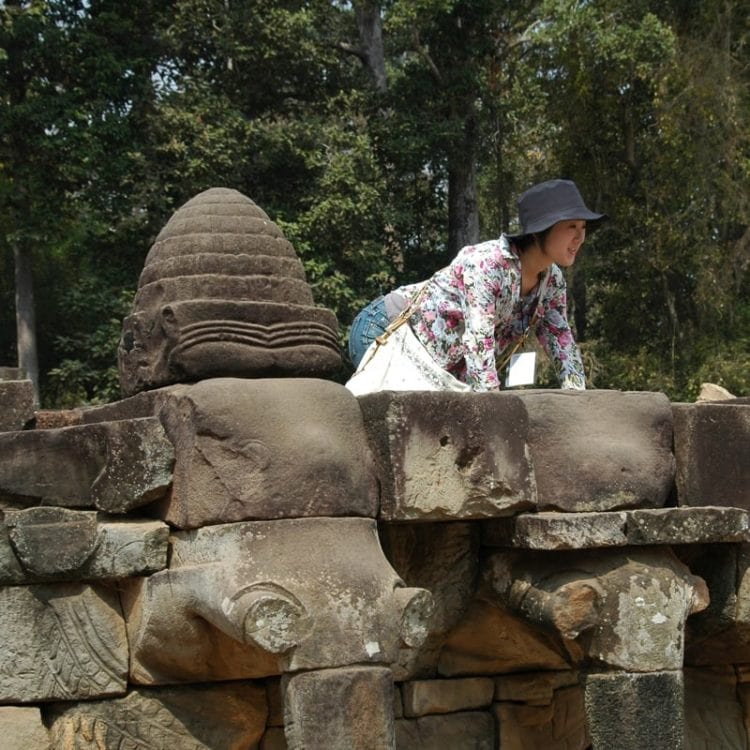
Don’t get us wrong – we enjoy photography and carry a large camera too. But the photo staging at the temples approached the absurd. Not to mention, it was disheartening to see how many of the tourists mistreated the temple ruins, climbing atop a thousand year old wall for a photo opportunity while ignoring a temple employee who begged them to get down.

We noticed a little Buddhist temple behind Bayon where several people were lighting incense and talking to a wise looking monk. Even in the midst of tourist and shutterbug chaos, these people were going about their routine and prayers. It was heartening to see that these sites are still being used by Cambodians for spiritual purposes. We weren’t just walking through a museum but a place that has meaning for the living.

In order to save our sanity from the posing and shutterbug-obsessed crowds, we decided to take the advice of a local – view the temples in opposite order – on our second day in the complex. The idea is simple: when hordes are swamping a temple for the perfect sunrise shot, go to where they'll be at sunset and vice versa…and spend time in the early afternoon hours, when most tourists have retreated for a snooze in town. The value of this approach cannot be understated. Ta Phrom in mid-afternoon (after the crowds have snapped their “Tomb Raider” photos) is pleasant. In late afternoon, as crowds advance on Angkor Wat for sunset, Bayon (with its many faces) is empty and draped in dramatic shadows. This is how the temples were meant to be seen.
Visiting Banteay Srei Temple
Having heard about the delicate engravings and charm of Banteay Srei (Khmer for “Citadel of the Women”) temple, we organized a special trip there with our tuk-tuk driver on our third day. It is one of the oldest Hindu temples at Angkor and dates back to the 10th century.
Not Early Enough

We arrived plenty early for us, at 8:30 AM, but not nearly early enough to beat the throngs. The tour buses were already lined up and groups of tourists were being herded inside through the main entrance. The complex is small and people are outnumbered only by cameras. As you duck out of courtesy from one photo, you find yourself falling into another. We were having flashbacks to our first morning at Bayon. To maintain our sanity, we retreated to the outside courtyard until some calm ensued inside. The green area on the perimeter provides a nice perspective to view the temple…in peace. It also allows you to appreciate the temple's intended intimacy and its reddish glow in the early morning light.
Divine Engravings
When we finally entered the main temple area, we understood why this temple has become so popular. The engravings are deep, unique and narrative. As we eavesdropped on tour guides providing explanations, we learned of different Hindu figures and legends being depicted in the red stone. As in Italian opera, love, war, death and deception figured prominently.
Zoom Lens and Zoo Behavior

We saw a couple of cute Cambodian girls, around 5-6ish, sitting in a windowsill, just hanging out and playing. Next thing we know, a group of Western tourists (possibly American) descended upon them in a group and shoved their mega-zoom lenses (about 1+ foot in length) in the kids' faces. The tourists made cooing noises at the girls, as if they were animals in a zoo, presumably to prompt a reaction for their brilliant photography. Fittingly, the girls looked back at them stoically and emotionless. Look for these uninspired shots in your favorite magazine sometime soon.
Isn’t the point of having a zoom lens that size to avoid poking people in the eyeball for a close-up? It was a truly sad scene and we were embarrassed for all involved.
We exited the temple a bit saddened by the actions of tourists, but in admiration of the temple and its artists. The popularity of Banteay Srei may help to destroy it, though, unless restrictions are placed on the number of tourists allowed in at one time and further barricades are erected to prevent people from pawing the engravings.
Breakfast Soup and Villages

We found redemption and authenticity as our our tuk-tuk driver downed a bowl of Cambodian breakfast soup just around the corner at a food stall with other drivers. We joined him for a second breakfast and ended up eating two bowls of the stuff ourselves. It was some of the best soup we'd had (or best food for that matter) – stunningly fresh rice noodles covered with a light yellow fish-based broth and topped off with a spoonful of sweet peanut soup. Grated fresh banana flower, long beans, cucumbers and bitter herbs topped it off and complemented the soup in taste and texture. We are now among the converted and consider ourselves charter members of the Soup for Breakfast Club.
On our return to Siem Reap we stopped at several villages, witnessed how people make palm sugar candies, and watched more than a few water buffaloes getting sponge baths from devoted owners hoping to help them escape from the baking heat of the dry season. By that point, obnoxious tourists with mega telephoto lenses were all but forgotten.
Angkor Temples Lasting Impressions
The temples of Angkor surprised us by their scale and diversity. For us, we were impressed by Bayon with its towers of smiling faces. Angkor Wat to us was overrated. Perhaps we should have visited it at sunrise. Ta Prohm is fascinating, if only to watch nature outlast man-made structures. Pre Rup is also proved a visual treat, with its rose-colored brick and sandstone.

While it’s easy to get overwhelmed by the size of the temples, keep your eyes open for details and engravings. Differences in headdress, position, smile, eyes and jewelry of the Apsara dancer tell the history from temple to temple. And although these engravings are over 1000 years old, a secret smile in the dancers’ expressions still translates today.
Arranging a Driver and Tour of the Angkor Temples
- How much time: Three days is the minimum amount of time needed to view the main temples. The heat, crowds and vastness take a toll, so pace yourself and take breaks so as to not get overheated or reach temple saturation early. If you have the luxury of time, get a seven-day pass and visit a few temples a day.
- Tickets: A 3-day pass costs $40 and a 7-day pass is $60. Bring a photo of yourself for your ticket or else wait in line with a busload of Korean tourists to get a free photo. It pays to be prepared.
- Transportation: Hire a tuk tuk driver through your hotel or find one on the street like we did. Expect to pay $10-$12 per day (and above) for the driver to take you around the main sites, including a return trip to town in the afternoon for lunch or a snooze. To go to Banteay Srey or one of the other distant temples, expect to pay an additional $6-$10. Cars and motorbikes are also possible.
- Guides: Most tuk-tuk drivers will give you some background information about the sites and lend you a book to take inside for more details. Official guides in English are also available for around $25-$35 per day.
- Circuit: Many people follow a short circuit on day one and a longer circuit the second day, with a third day spent going out to Banteay Srey or catching some of the temples missed on earlier days. Try doing the circuits in reverse so that you miss some of the tour buses. Also consider visiting some of the sites in the afternoon when the tour buses return to town– it does get hot, but bearing the heat can be worth it to enjoy the temples in peace.
- Water: You are going to need lots of it!! Children and women sell water, juice, soda, snacks, and fruit around the main temples, so you are never far away from relief and hydration. Prices are negotiable. Don’t use this occasion to practice your bargaining skills, but if it seems like extortion, then propose a fair price. We had a hard time paying 4x the price of water in town, so we'd propose 2x and the sellers easily agreed.
- Food: There is a line of restaurants near Bayon serving Cambodian food. We found the prices high, but noticed that the longer we stared at the menu outside a stall, the more the prices came down. We settled on $2 per dish and our driver’s lunch got thrown in as well. The sour soup and fish curry were remarkably good (at stall #8, if we remember correctly).
Wonderfully written post about these temples. The entrance way into the Ankor Wat temples was quite impressive. During my visit I was intrigued by the carvings of Tep Apsar. As you said the local Khmer food was good and well priced. This is somewhere that should be any travelers bucket list.
@Michael: Thanks- glad you enjoyed this post! The intricacy of the carvings were impressive, especially when you consider the age of most of the temples and the wear and tear they have endured. Yes, Khmer food is very tasty and can be incredibly cheap if you eat with locals. Have very good memories of the soups.
Thanks for the reverse-circuit tip, we will definitely use it!
We had the luxury of a week at Siem Reap. We hired a tuktuk for the week and once we convinced our driver to get off the “circuit” it was great. We went out early to the popular temples or visited them at lunch time. Then we had time to visit some of the lesser visited temples and it was magic.