Last Updated on November 13, 2022 by Audrey Scott
When readers ask, “Should I travel to Kyrgyzstan? Where should I go? What kind of experiences will I have?” We wonder how we’ll keep it short.
Because the country is still relatively undiscovered and serves so many different styles of travel, the answer is: it really depends on what you’re after. There's much more to do and experience in Kyrgyzstan than you might first have imagined.
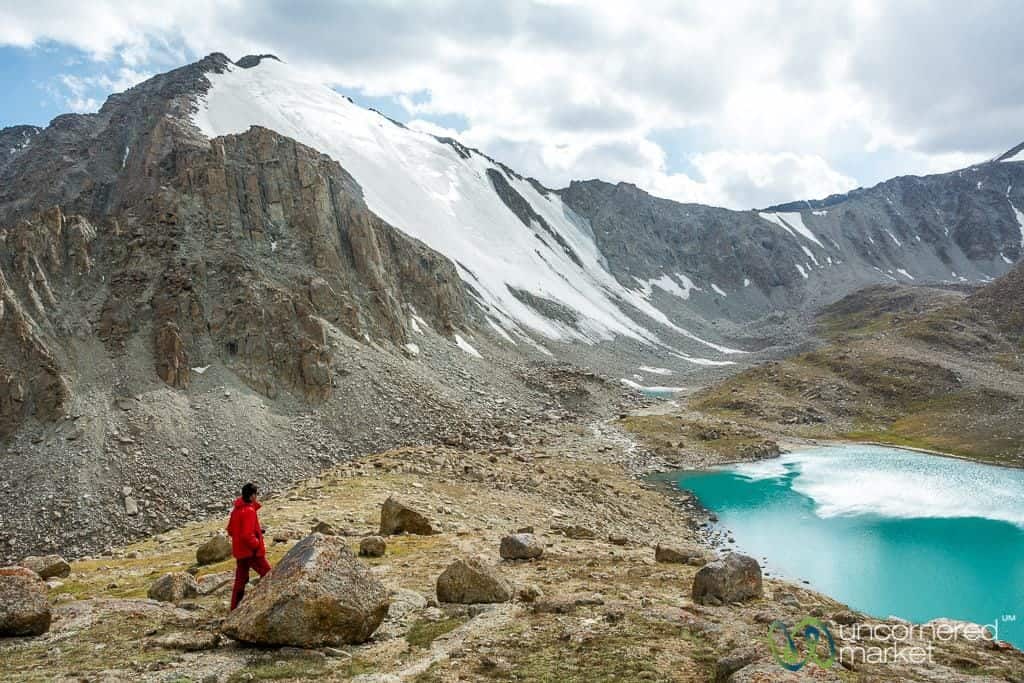
Mountain landscapes and trekking? Check. Cultural and culinary experiences? Check. Living nomadic culture and yurts? Check. Urban adventures and wellness retreats? Got that, too.
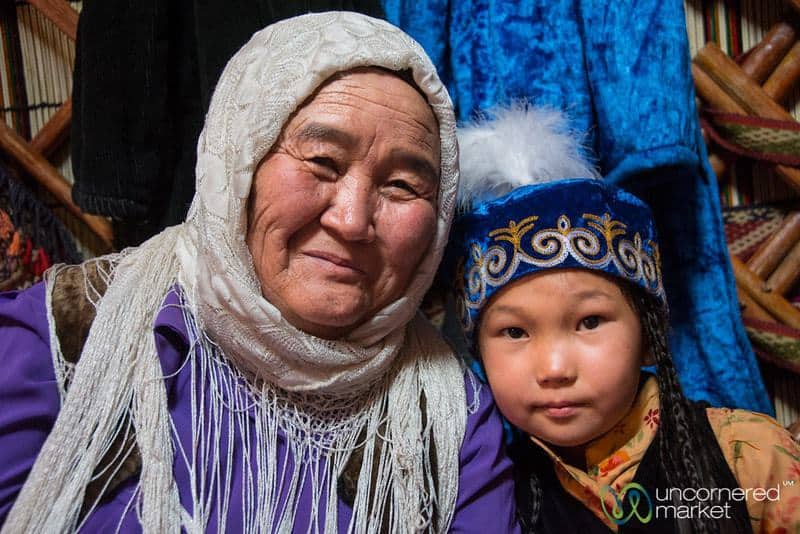
There's good reason why Kyrgyzstan makes our list of favorite destinations, as do its treks.
Note: In full disclosure, we worked with several of the destinations and community organizations (DMOs) mentioned below to help them develop many of these new culinary and cultural tours and experiences. This was part of our consulting work on the USAID Business Growth Initiative (BGI) tourism development project aimed at promoting regional and local tourism initiatives to keep tourism money local and benefit the communities. So, we think these local tours and connections are pretty cool…and we hope you do, too!
Table of Contents
27 Things to Do, See and Eat in Kyrgyzstan
1. Get Amongst It and Trek the Tian Shan or Pamir-Alay Mountains
With over 90% of Kyrgyzstan covered in mountains, it’s impossible to escape them. Good thing, because those mountains are among the country’s biggest draw. Deservedly so.
Tucked into those mountains are experiences for adventure travelers and trekkers, as well as those who just want to temporarily disconnect from their daily concerns and reconnect with nature and themselves.
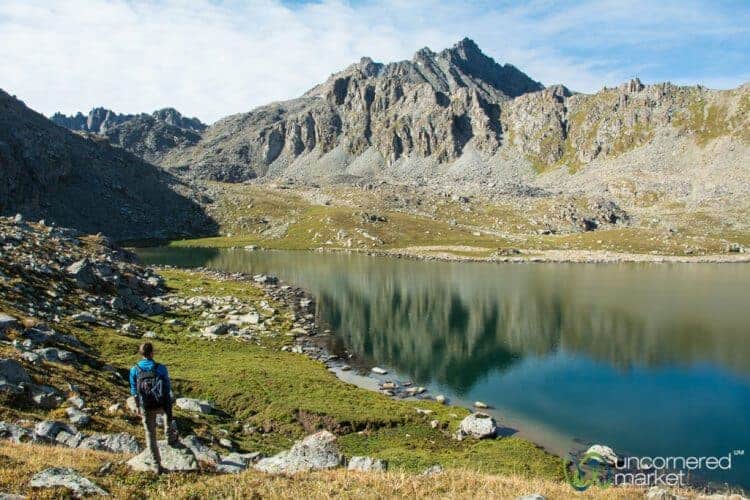
The mountains also serve as a fitting backdrop for Kyrgyz nomadic culture and living history. This means that during your treks you'll also encounter local shepherds and their families up on the jailoo (high pastures) with their animals. Kyrgyz people and nomadic culture are hospitable (see #9), so don't be surprised if you are invited in for tea or a snack.
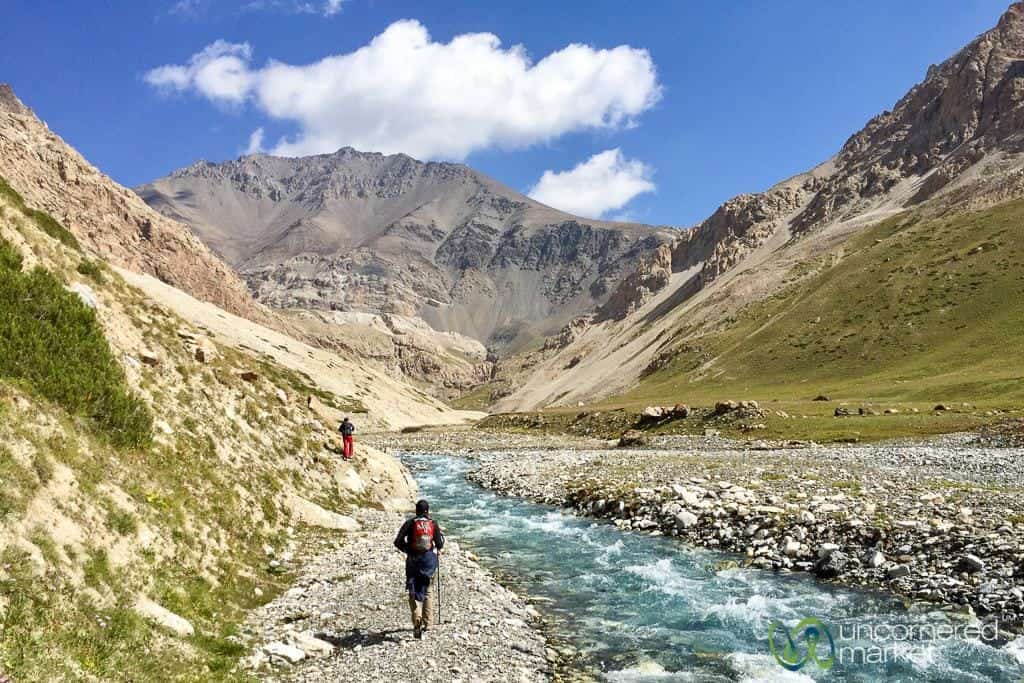
The two main mountain ranges in Kyrgyzstan include the Tian Shan Mountains that cover most of Kyrgyzstan and continue into Kazakhstan and China in the east and the Pamir-Alay Mountains that go into Tajikistan and China in the southern part of the country. These are serious mountain ranges with several peaks each over 7,000 meters (23,000 feet), but they both have many trekking options and routes for every difficulty level and desired length of trek (e.g., day hikes to multi-day treks).
Recommended trekking regions and routes:
- Treks near Karakol: Altyn-Arashan, Ala Kol, Archa Tor Pass, Highlights of Ak Suu, Nomad Valley Trek
- Treks in the Jyrgalan Valley: Boz-Uchuk Lakes, Kesenkiya Loop, Robber's Canyon, Ailampa Glacier Loop, Glacier Valleys
- Treks on the South Shore of Lake Issyk-Kul: Skazka, Jeti-Oguz, Shatyly Overlook, Barskoon Waterfalls
- Treks near Osh (Pamir-Alay Mountains / Alay Region): Heights of Alay, Koshkol Lakes, Lenin Peak Base Camp, Kyrgyz Ata National Park
- Treks near Naryn: Salkyn Tur, Kol Suu Lake
2. Go Back in Time with the Golden Eagles of Salbuurun
Spend time with members of the Kyrgyz Salbuurun Federation and understand the rudiments and reasons for Kyrgyz nomadic traditions of hunting with golden eagles, falcons and taigan hunting dogs. This image only begins to tell a real-life story and history that looks and feels like a Central Asian version of Game of Thrones.
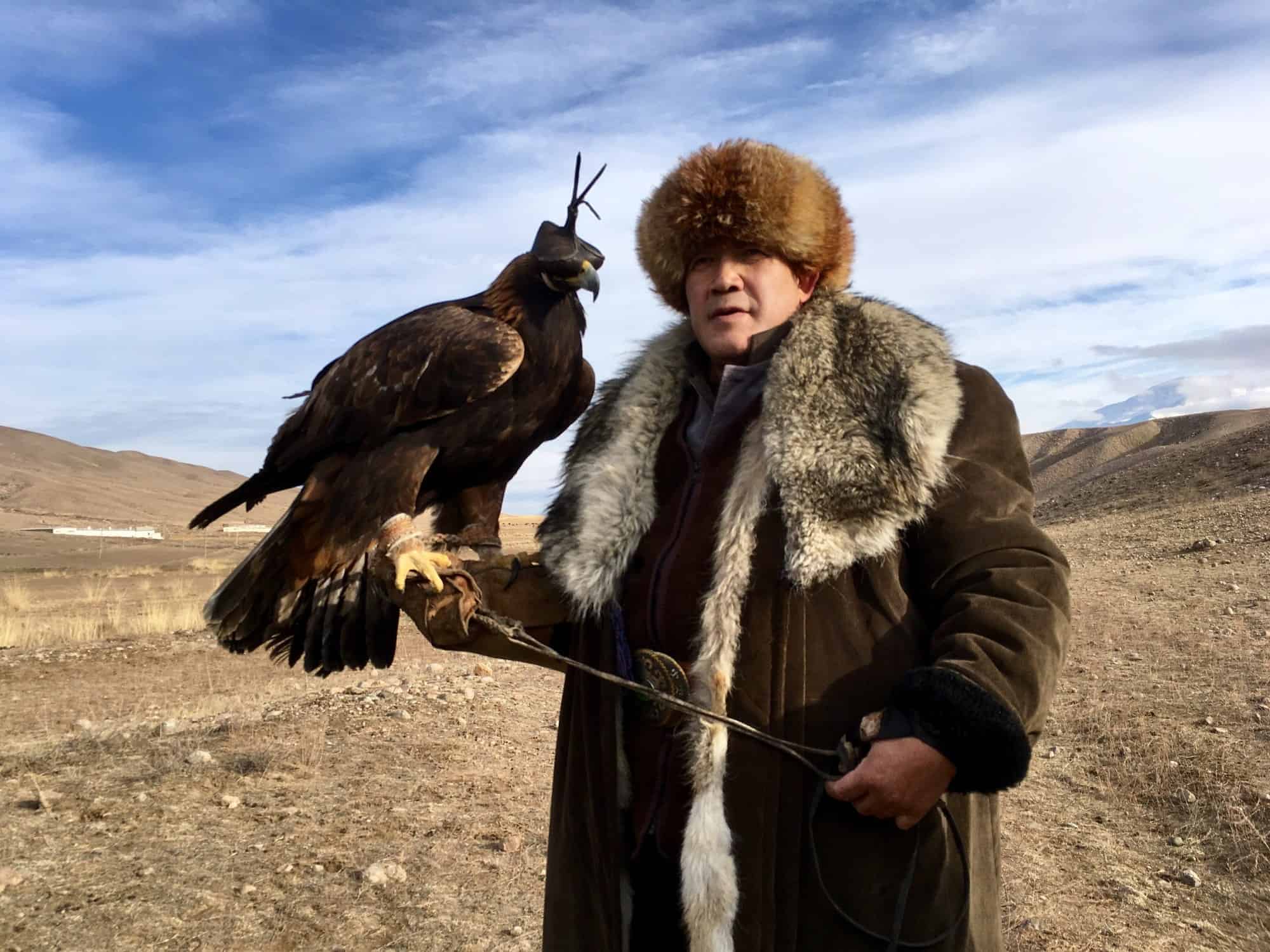
How to do it: Some local guest houses and yurt camps along the South Shore or Lake Issyk-Kul can organize a Salbuurun demonstration for you on their own premises. You'll have a chance to see demonstrations on how hunters work together as a team with their golden eagles, taigan dogs and horses, including sample hunts (don't worry, stuffed animals are used) and archery on horseback. First you’ll witness, and then maybe try for yourself. .
3. Horse Trek to Song Kul or Köl Suu Lake and Hang with the Shepherds
Even if you’ve never ridden a horse – or as in our case, just because you’ve never ridden a horse – this experience is an absolute must.
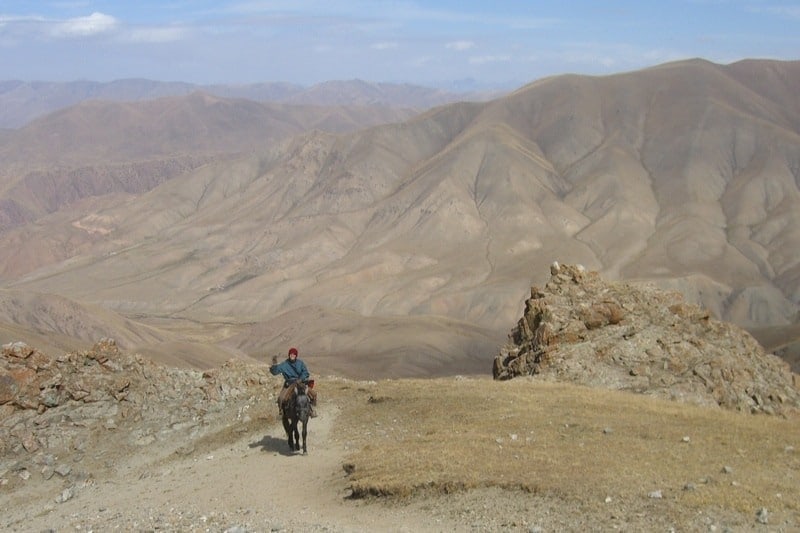
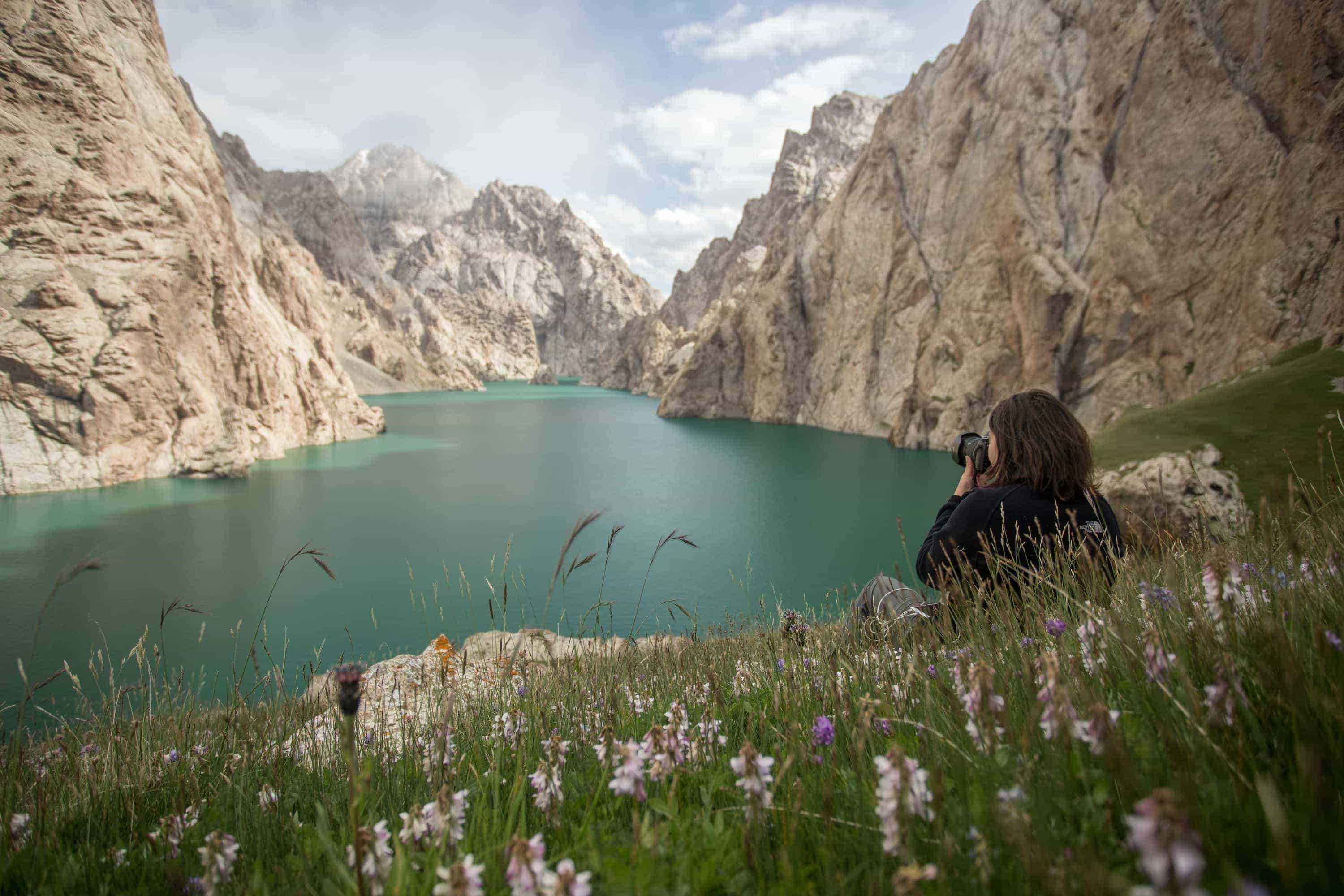
After realizing that horses are the choice work animal and often the transport of choice across the countryside, take one with a guide and head into the hills on a journey to the mountain lake of Song Kul (3,016 meters / 9,895 feet) or Köl Suu (3,514 meters/ 11,530 feet) in Naryn Region.
Overnight, you stay in a shepherd family’s yurt, then finish off at the lake for another overnight stay. The setting: photogenic, iconic and visually stunning. Kyrgyz landscape and culture collide in what remains one of the most memorable experiences of our early travels.
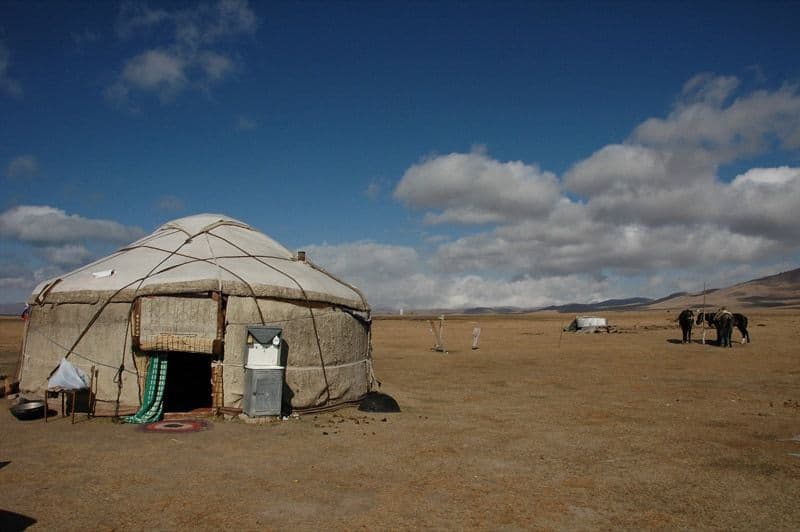
For the truly offbeat and cultural immersive, time your visit with Ramadan. If you do, maybe you’ll have a celebratory goat slain in your honor.
Note: We've heard over the years that Song Kul Lake has become more crowded with its increased popularity, so if you want a more off-the-beaten-path experience consider choosing Köl Suu lake. It's also in the Naryn region, but a little more remote and close to the border with China. We have not been ourselves, but we've heard from friends with a lot of experience in Kyrgyzstan that the experience there and lake make it worth the extra effort to get there.
How to do it: We arranged our Song-Kul horse trek, including a horse guide, horses, and yurt-stays, with CBT Kochkor. For a journey to Köl Suu Lake, CBT Naryn can arrange the permit, transport, yurt stays and horseback riding for you. If you don't think you're up for a lots of horseback riding (don't worry, we get it), consider one of the day horse treks from Naryn or Jyrgalan.
4. Get Lost in the Lanes of the Osh Bazaar
Travel to Osh and you'll find a large ethnically complex city in southern Kyrgyzstan. It's grown on us each time we've visited. With Uzbek and Kyrgyz populations, and a few Tajiks thrown in for good measure, Osh is a sort of Central Asian mixing bowl of cultures, food and people.
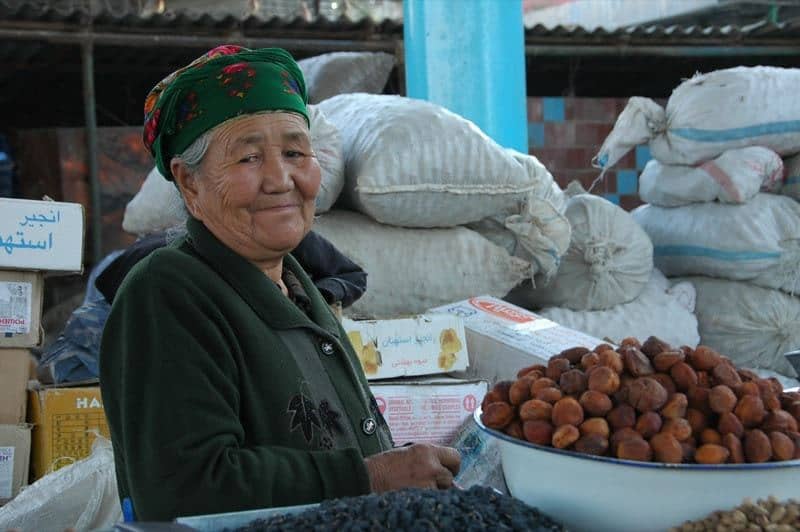
There’s no better place to experience this than at the Osh Jayma Bazaar, the oldest in the region at over 2,000 years old. It's living history underscores its (and the city's) importance as a Silk Road trading center. The fresh market and goods bazaar seem to take over much of the city and is one of its most defining features. Enjoy getting lost in the lanes filled with spices, dried fruits and nuts, fresh produce, dairy products, and more.
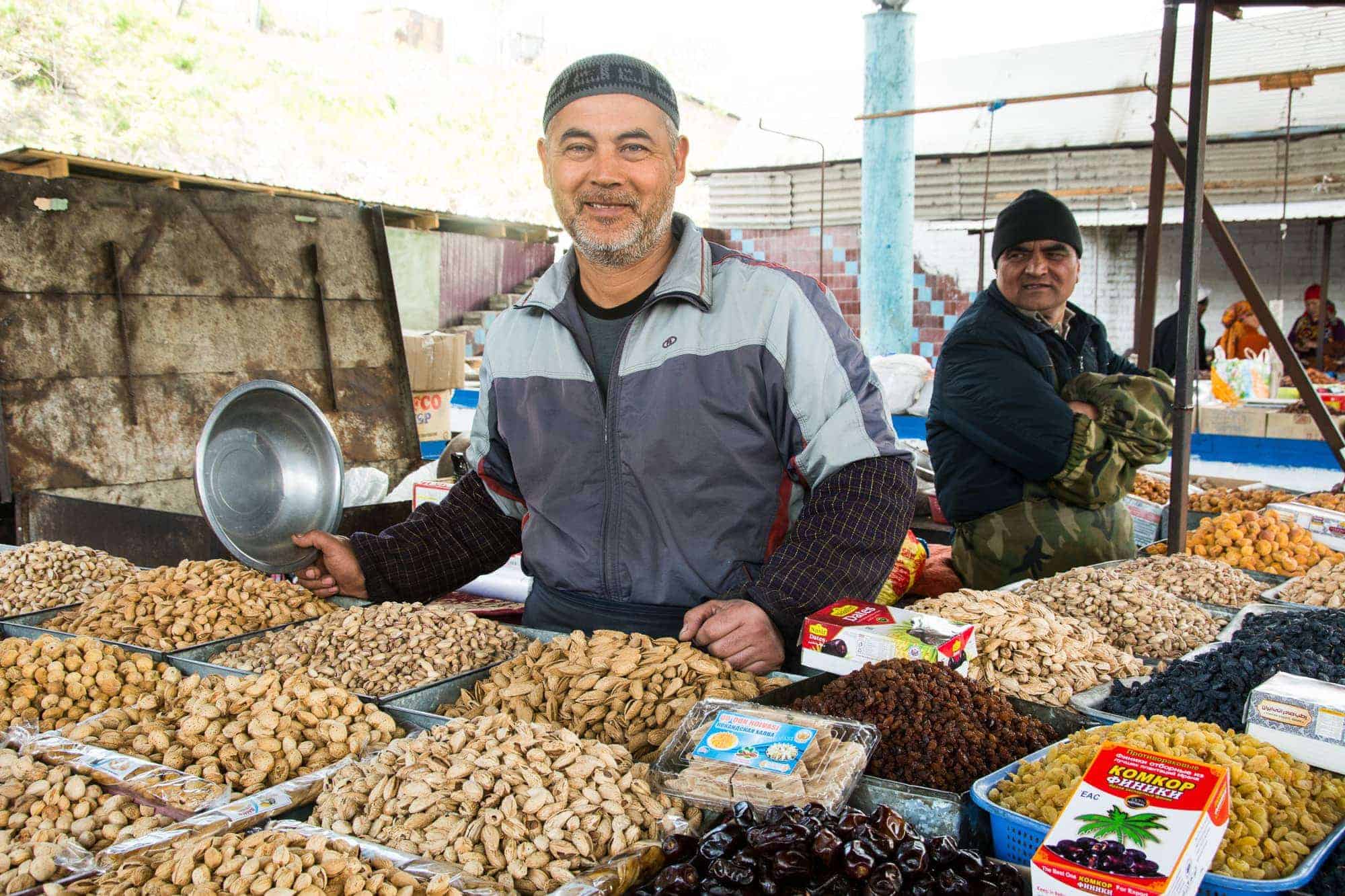
Note: The Osh Bazaar is also the perfect place to stock up on snacks and the ingredients for make-your-own trail mix before heading into the Pamir-Alay Mountains for a trek or for a Pamir Highway road trip to Tajikistan.
Other markets worth visiting in Kyrgyzstan: Most towns and cities will have their own fresh market. These are fun places to wander around, possibly sample a few treats, ask a few questions (if you have some basic Russian) and just get a feel for the local cuisine and people.
Karakol has a small bazaar (Bugu Bazaar) in the center of town which is a manageable size, but still has a good selection of fresh fruits and vegetables, bread, dried fruits and nuts (our favorite are the fried fava beans), mountain honey, and more. Further afield is Karakol's Big Bazaar with many more stands; it's also easy to get lost the in its small lanes and alleys.
Bishkek has several massive markets with Osh Bazaar as the most interesting for travelers. It's also worth popping into Naryn's central market to sample local honey, yogurt drinks and korut (dried yogurt snacks).
5. Drink a Tall Glass of Fermented Mare’s Milk (Kymyz)
Kymyz, or fermented mare’s milk, is a traditional and beloved Kyrgyz drink. It is worth noting that for foreigners who have not grown up drinking it, kymyz can be an acquired taste. What’s it like? Fizzy milk, with a bit of tang. Some compare it a bit to kefir. Be careful to drink small quantities your first time out so your stomach can become accustomed to the fermentation.
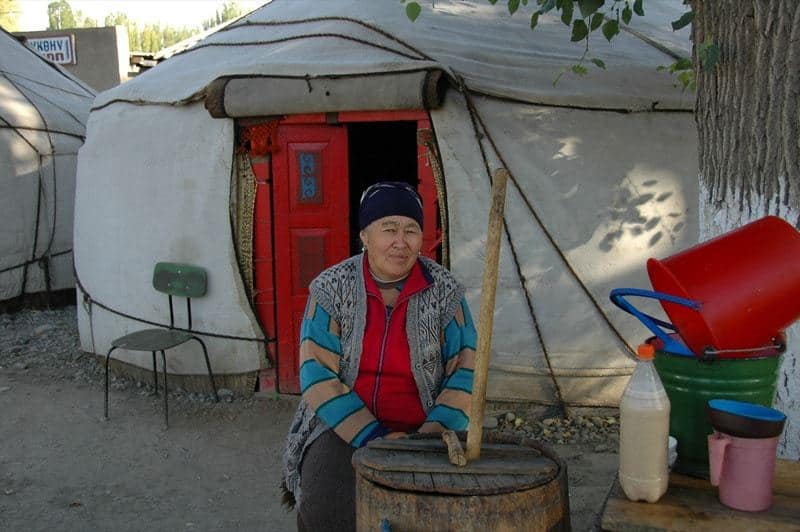
The first time we tried kymyz in Kyrgyzstan, it was from a roadside stand in the town of Kochkor. The woman running the stand almost didn't sell it to me for fear that it would make me sick before my horse trek. I convinced her that my stomach was already full of bacteria and I would be OK. It was probably the best kymyzI’ve ever tried.
If you really dig kymyz, you’re in luck. There are even spa-like health and wellness experiences that involve digestive kymyz treatments for five to ten days which apparently cure all that ails you. If you try it, let us know how it goes.
6. Get the Best Sleep of Your Life in a Yurt
For so many reasons, sleeping in a Kyrgyz yurt at least once in one’s life is a must-do. As the sun goes down and a chill descends, the warmth of a yurt is a welcome feeling. At night, enjoy the moonlight streaming through the tunduk, the latticed circular opening at the yurt’s apex.
Take a few warm, heavy blankets (there are usually plenty of them in just about every yurt you’ll find yourself), have your host cover the tunduk and enjoy a long, comfy slumber in complete darkness.
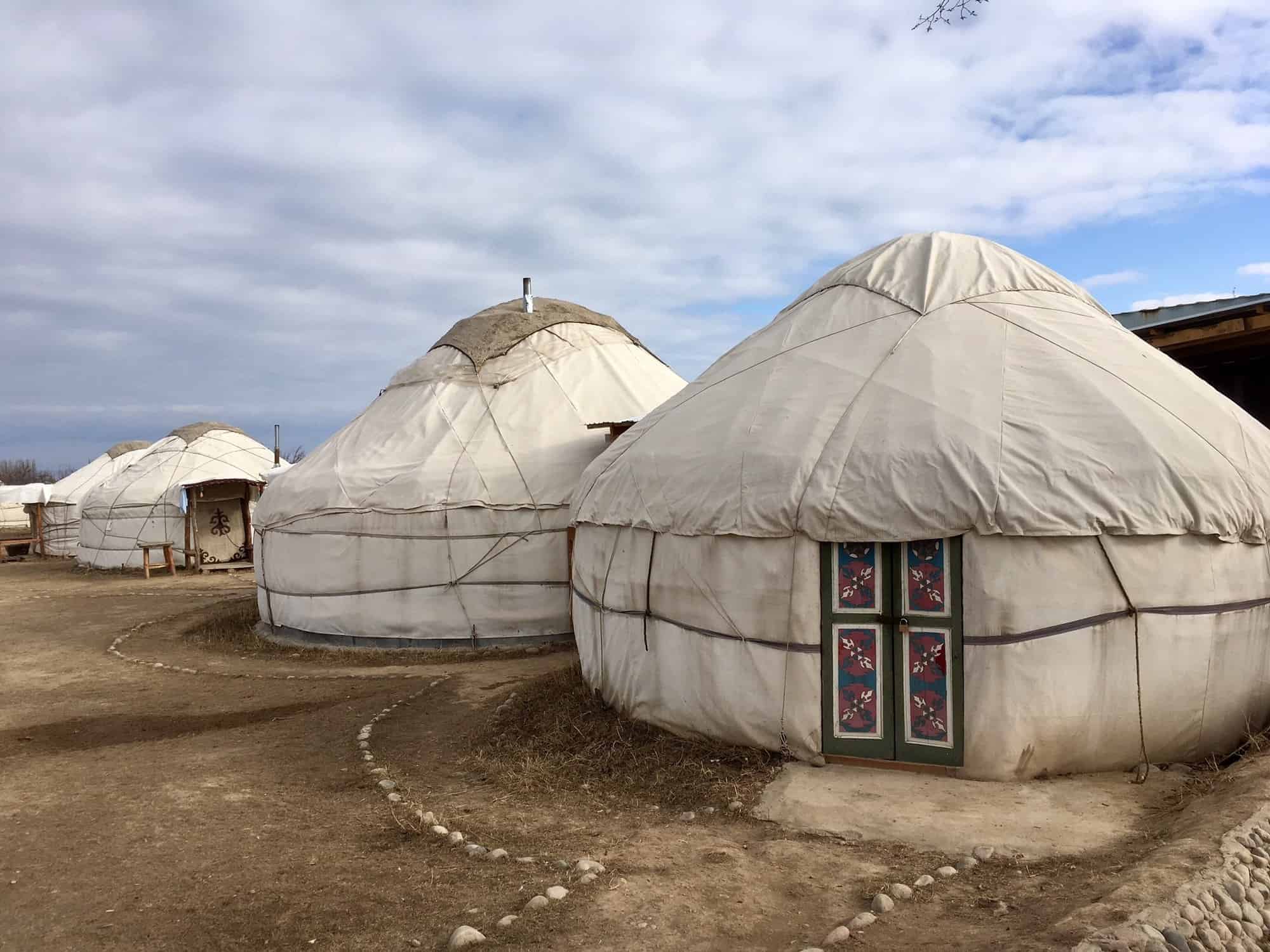
Note: Watching how yurts are built (and disassembled) is a pretty interesting process. Many Kyrgyz festivals (especially in South Shore of Lake Issyk-Kul) will include yurt-building competitions (the record is around 10 minutes) and you can also join a yurt-building tour in Kyzyl-Tuu village.
7. Release Your Inner Child in the Fairy Tale Canyons (Skazka Canyon)
Light adventure at its best. Drive up, talk a 20 minute walk, then do a 360 turn and be amazed by the landscape variety around you along Lake Issyk-Kul’s South Shore.
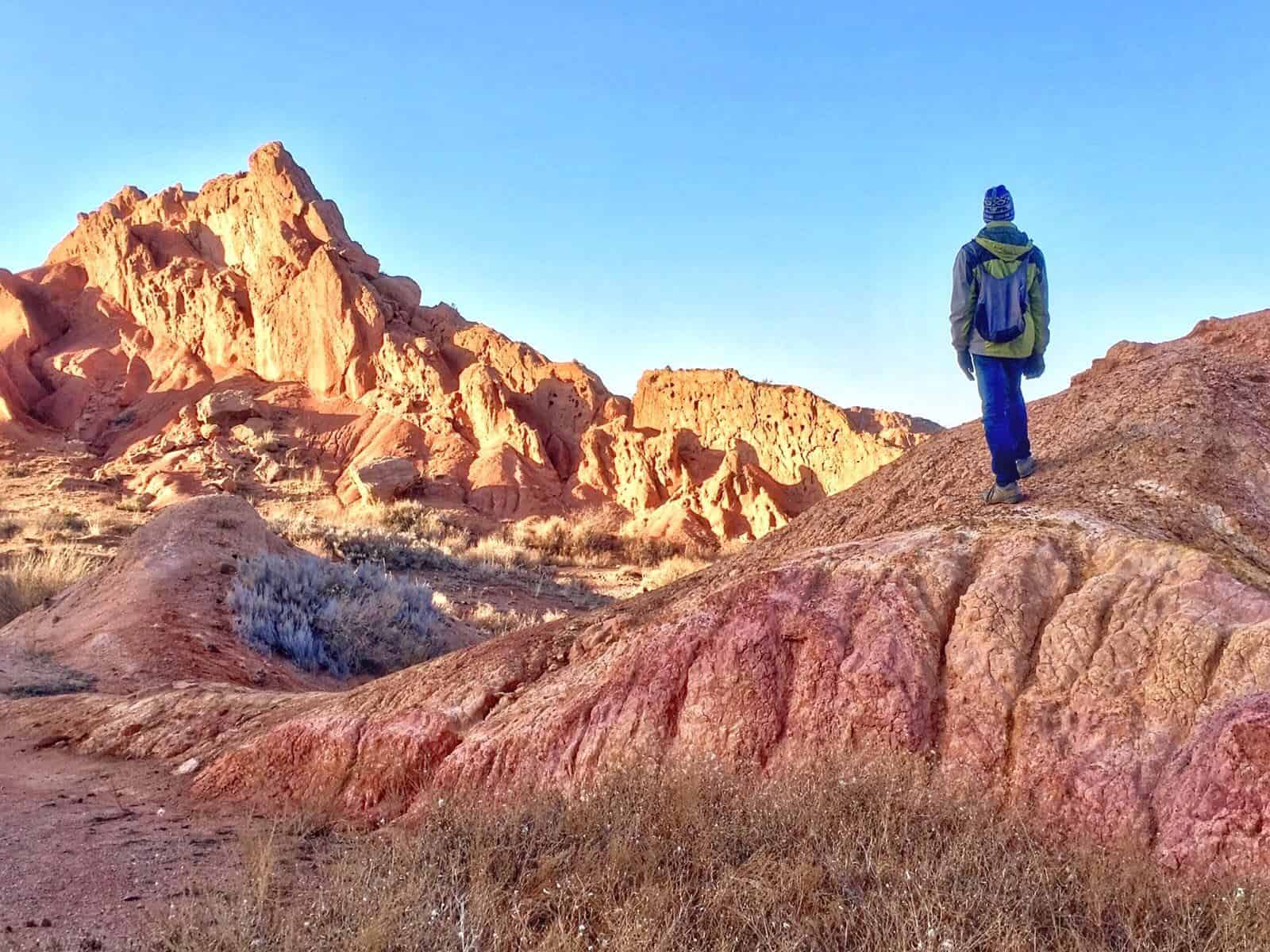
How to do it: Easiest way to get to Skazka is as a day trip from Bokonbaevo by hiring a driver to take you there, wait, and bring you back (around 1,500 som/$22). Alternatively, you can take a marshrutka towards Karakol from Bokonbaevo and ask to be dropped off on the main road at the turnoff sign for. It's about a 15-minute walk to the entrance. The entrance fee is 50 som.
8. Watch a Kok-Boru (Goat Carcass Polo) Match
Kok-boru, goat carcass polo, is one of Kyrgyzstan’s national and most beloved sports. After watching several matches at the World Nomad Games, we understand why: it is fast-paced and intense.
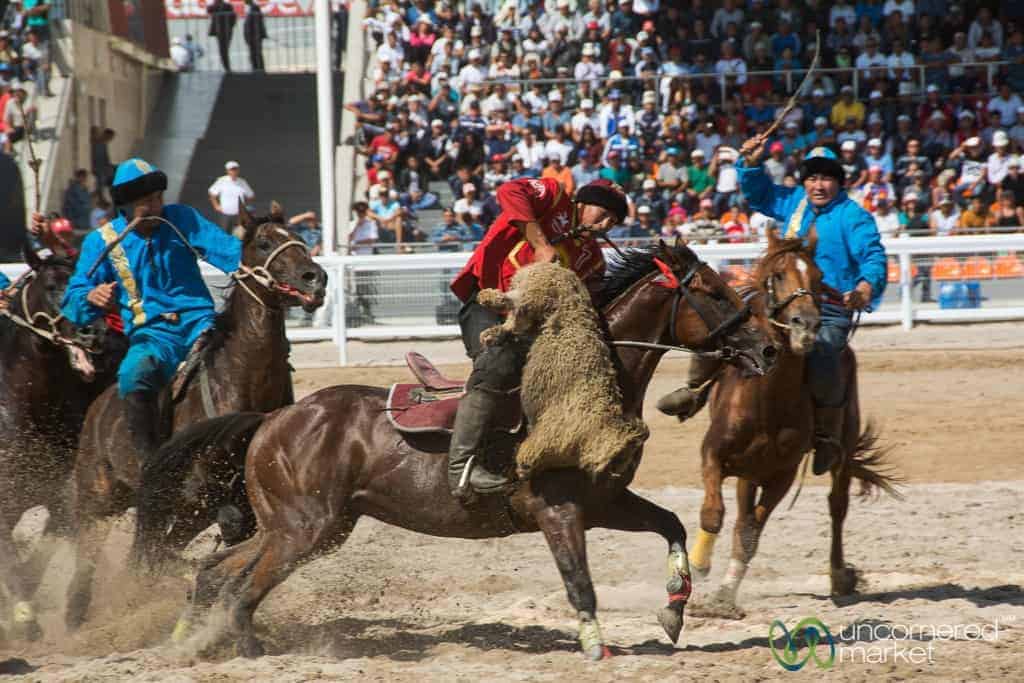
During the warmer months, most villages assemble pick-up kok-boru teams, so it is possible to catch an impromptu match if you ask around. In addition, many summer festivals (e.g., in South Shore of Lake Issyk-Kul or Jyrgalan) feature kok-boru games as part of the festivities.
We’ve also been told that almost all national holidays are celebrated with kok-boru. If you happen to be in Kyrgyzstan during that time keep your eye out for the kok-boru matches that take over stadiums across the country.
9. Enjoy Kyrgyz Hospitality on the Fly (Say Yes to Random Invitations)
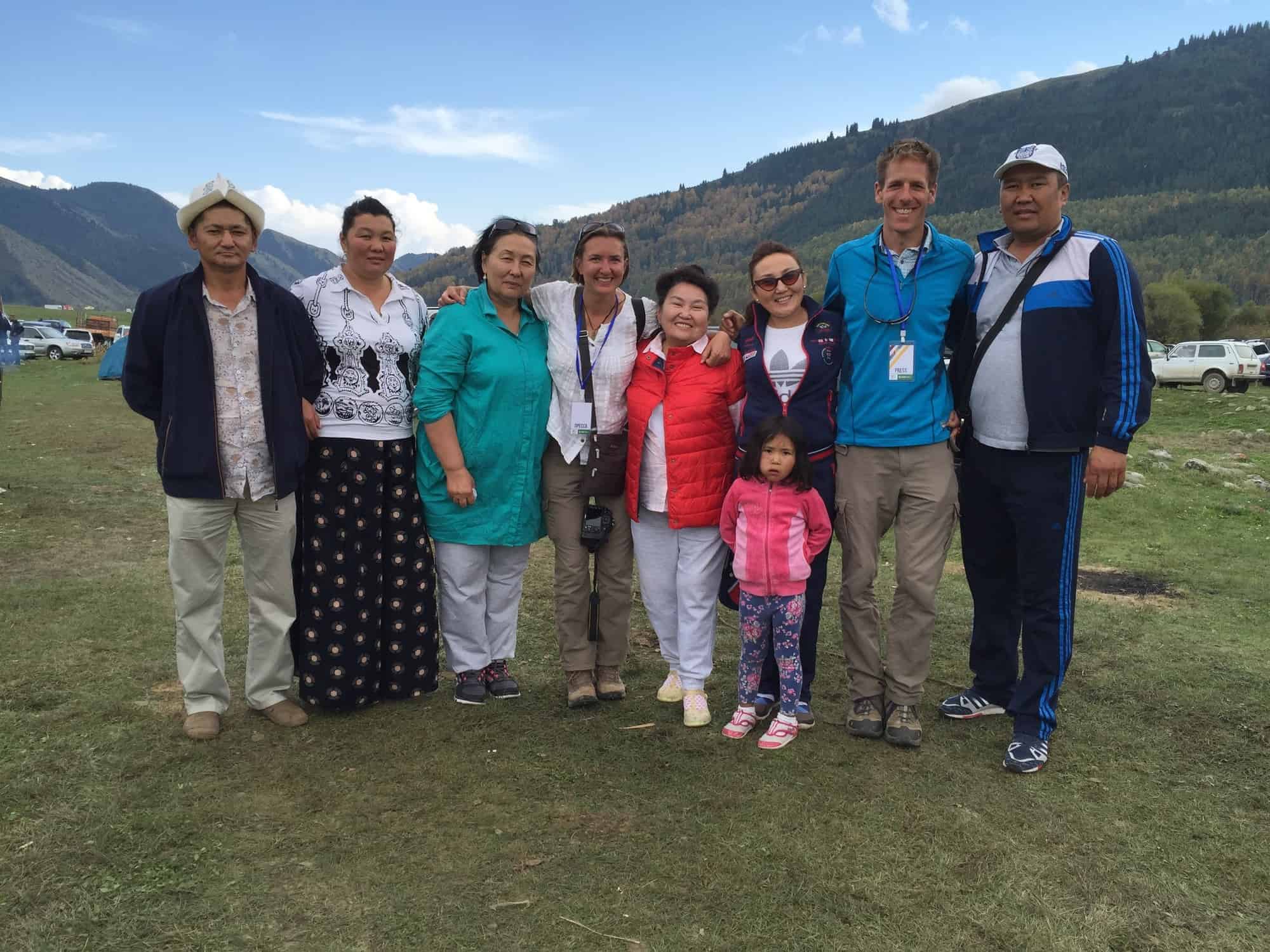
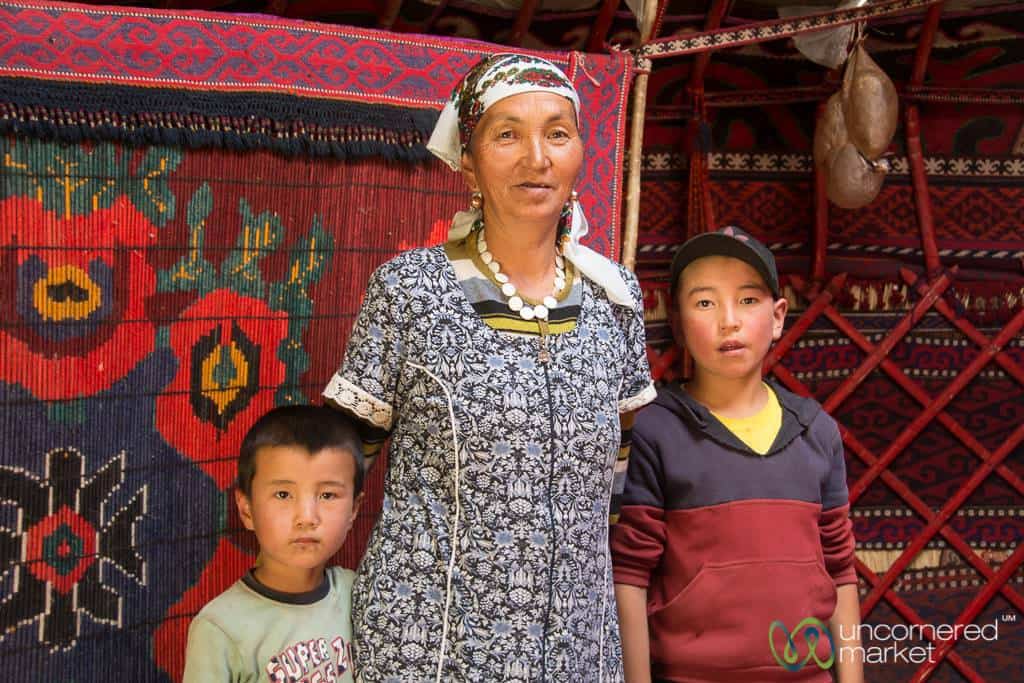
Kyrgyz people like to engage. They like to ask questions. They like to invite travelers to join them. They are hospitable. If a Kyrgyz person offers you lunch, a drink, or an opportunity to hang out, it's most likely genuine. Say yes to the invitation.
10. Sample Samsas in Osh
With its mixture of Uzbek and Kyrgyz cultures, Osh is famous for its giant somsas (chon samsa), stuffed pastries (usually with mutton and onions) baked on the side of a tandoor-like oven called a tandir. You can smell them baking a block away. Get them while they are hot before the fat inside has a chance to cool.
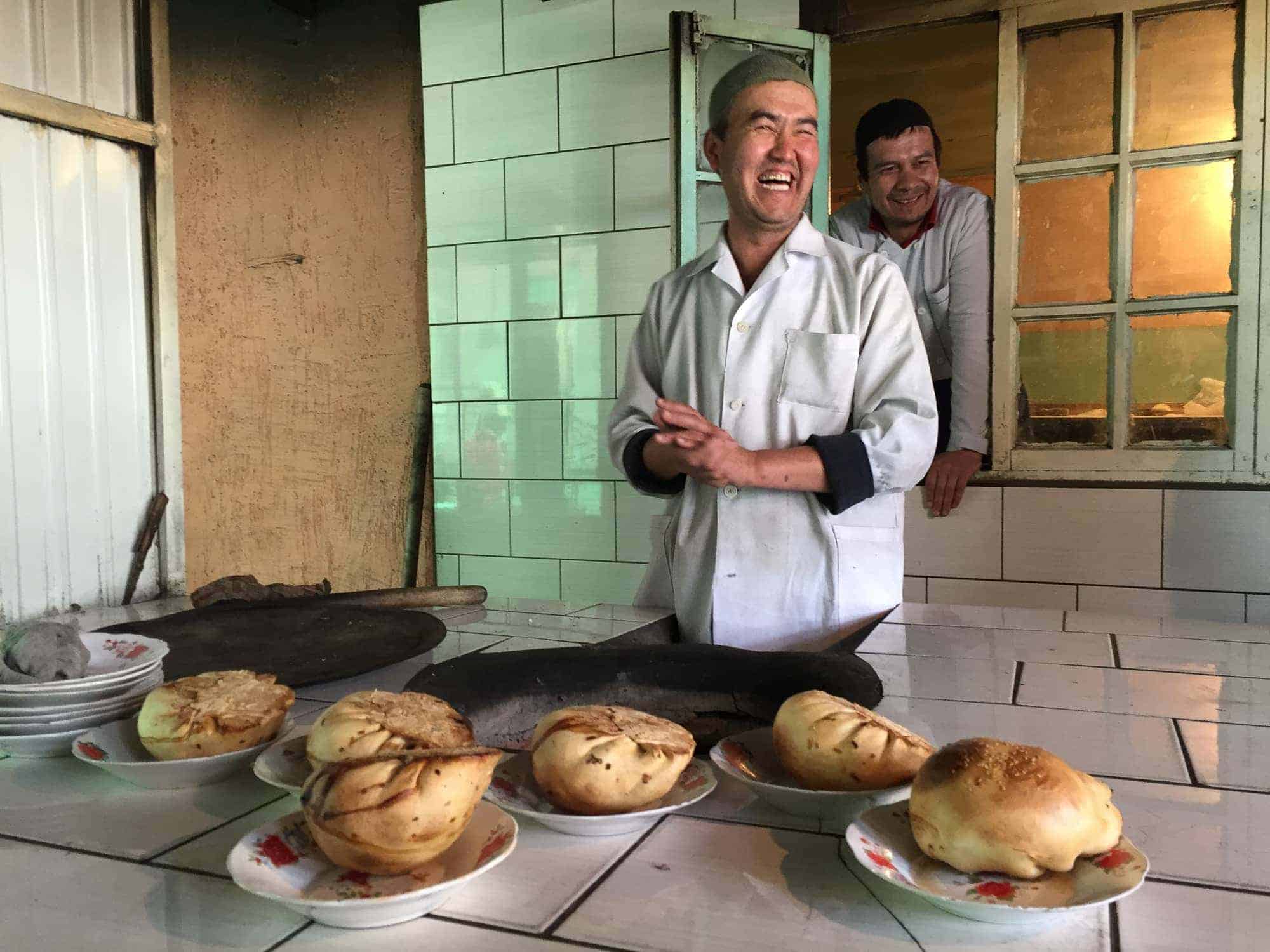
And don’t worry if bread products aren’t your thing. There are also plenty of steamed manti, stuffed dumplings, hanging around Osh as well. In fact, vegetarians can rejoice as the local dumpling specialties of maida manti and gök chuchvara are both meat-free.
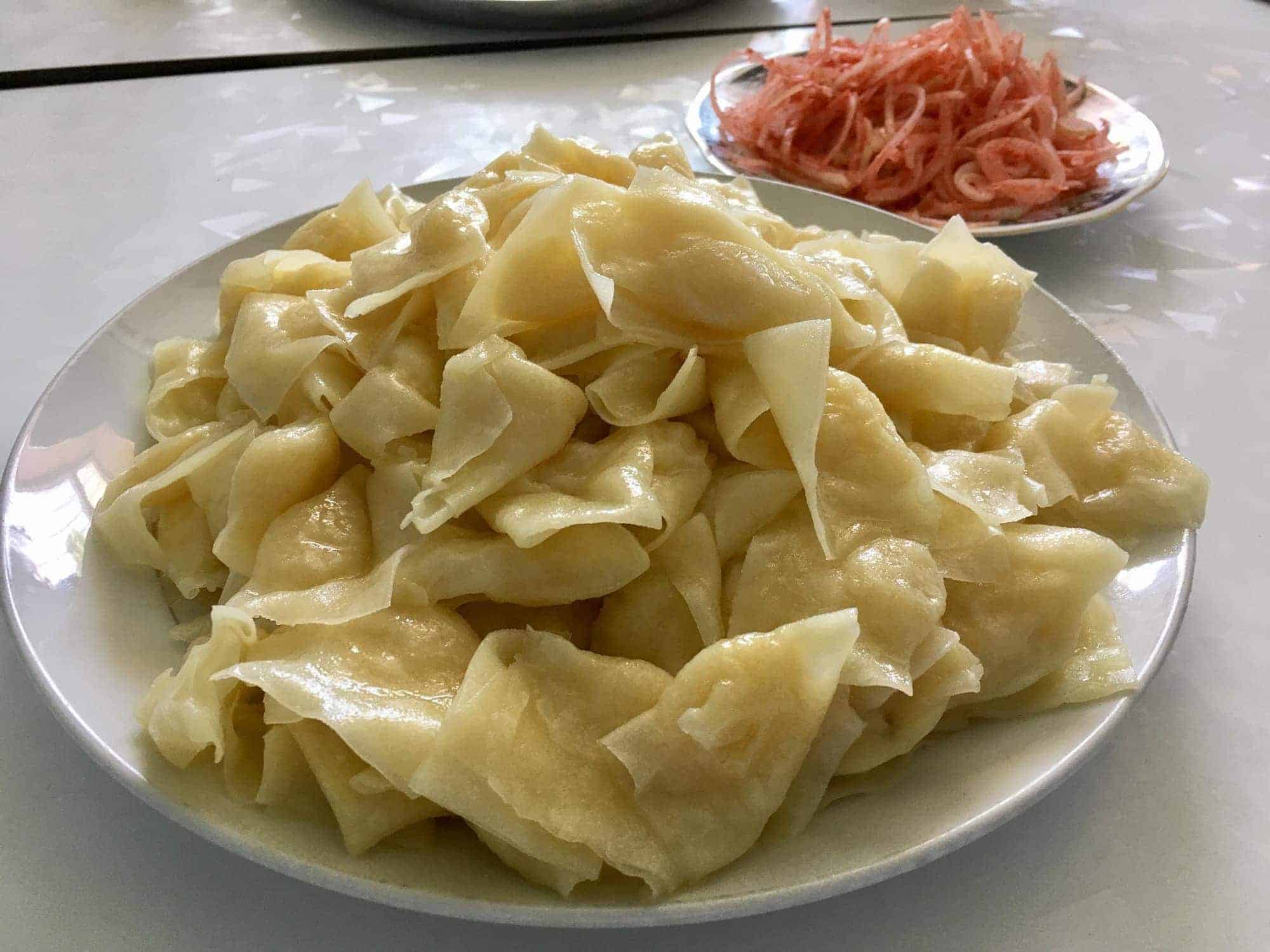
Note: If you want to try both samsa and maida manti, sign up for the Osh foodie tour as you'll have a chance to sample these Osh specialties as well as a few others in just a few hours. A vegetarian version of this tour is also possible.
11. Admire Kyrgyz Men in Kalpaks
The kalpak is a black and white, uniquely-shaped, traditional Kyrgyz men’s hat. It is one of the distinct symbols of Kyrgyzstan. I once had a conversation for an hour in broken Russian about how the kalpak is the most perfectly designed hat because it stabilizes temperature all year round – warm in the summer, cool in the winter.
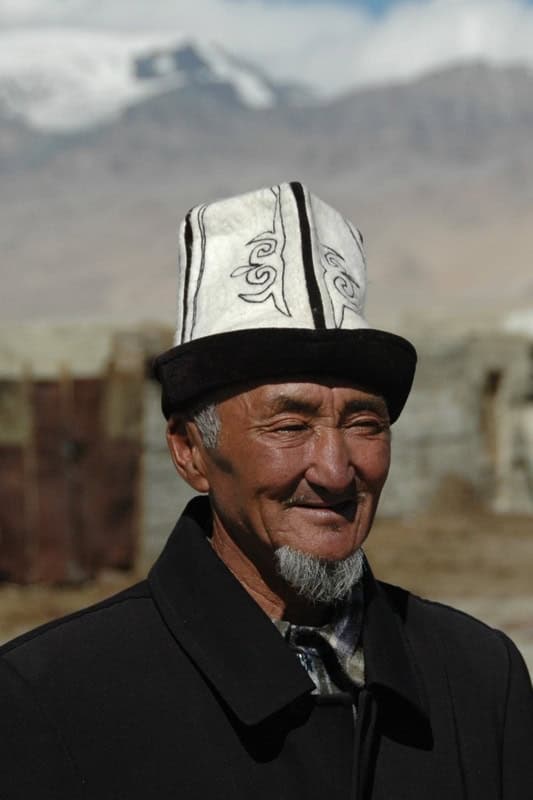
Now, I’m not so sure about where the kalpak falls in the scale of perfectly designed headwear around the world, but a group of older men hanging out in their kalpaks makes for quintessential Kyrgyz tableau. If you happen to be in the country for any sort of festival or holiday, you'll surely encounter a sea of kalpaks.
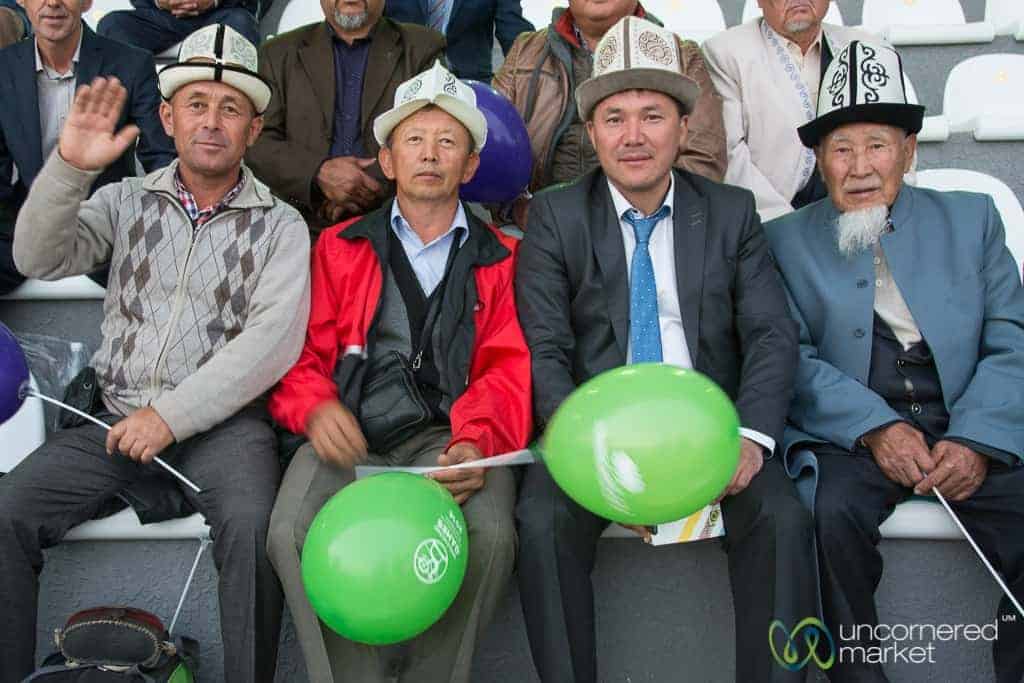
12. Receive Life Wisdom from a Friendly Shepherd
We've found that if you leave yourself open to others, wisdom can arrive in many forms from unlikely sources. During our first visit to the Southern Shore of Lake Issyk-Kul, we met this shepherd with 76 years of wisdom under his sagging belt.
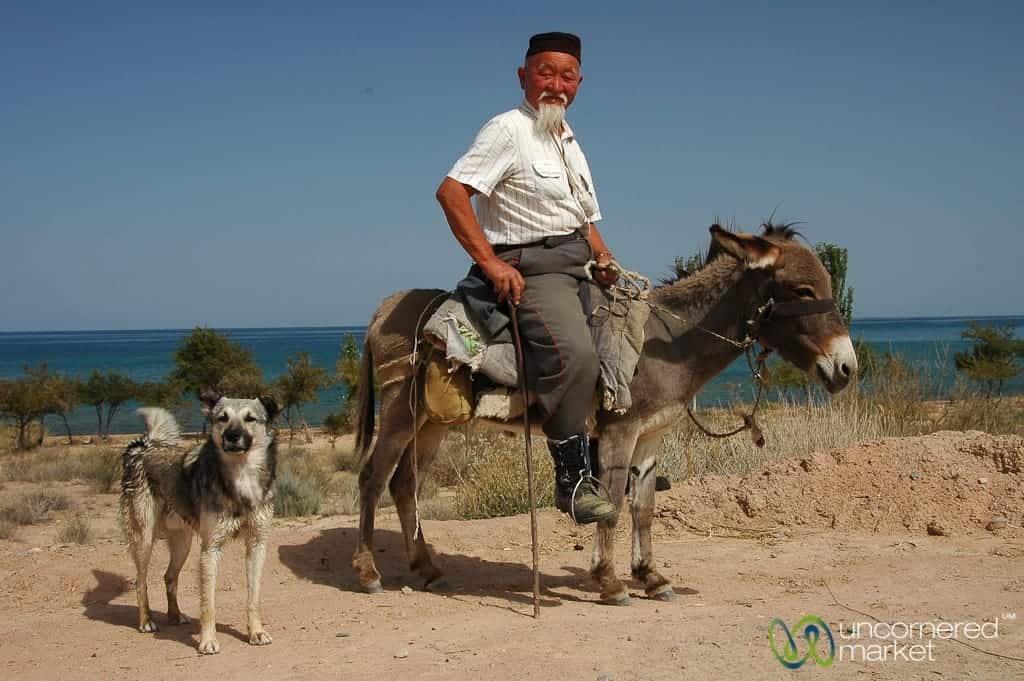
When we explained who we were and why we were encountering him in what seemed like the middle of nowhere, he told tells us that we should continue to wander, learn and explore while we are young.
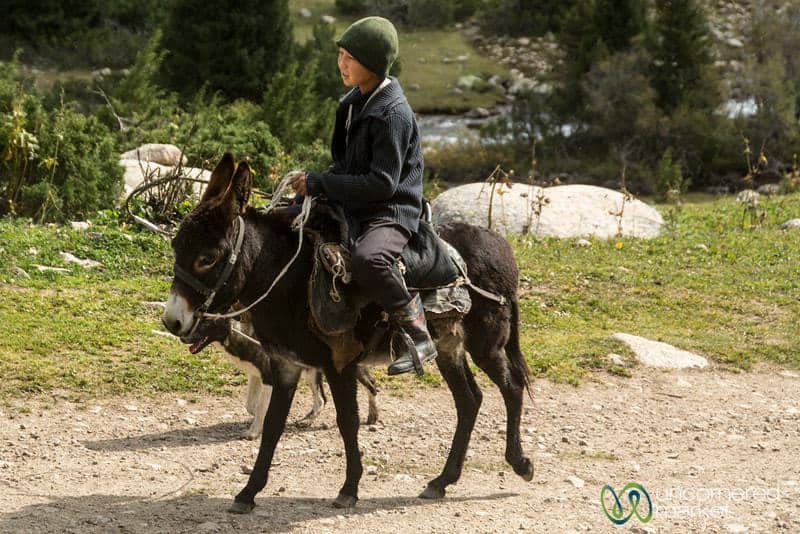
13. Attend the Olympics of Nomadic Sports (aka, the World Nomad Games)
The World Nomad Games take place every two years (on even years), usually in early to mid September. The next games are 2-8 September, 2018 in Cholpon-Ata (north shore of Lake Issyk-Kul) and several other locations.
Wrestling on horseback, goat carcass polo (kok-boru), hunting with golden eagles, archery on horseback, and stick wrestling are just a few of the events featuring nomad competitors from around the world.
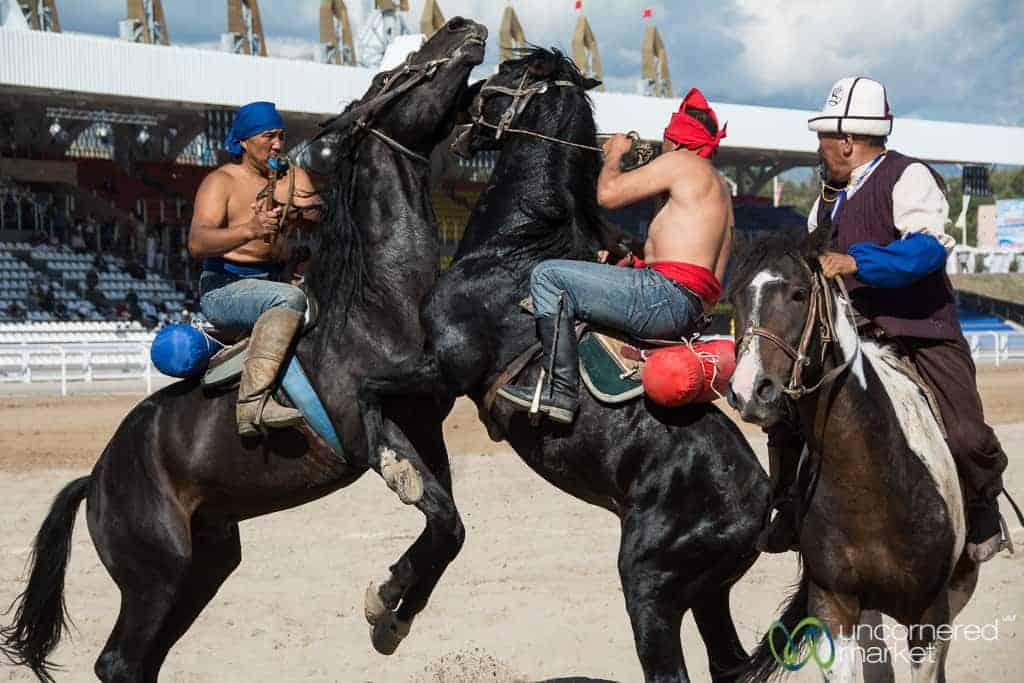
And, if you time your visit right you might indeed find yourself waving to Stephen Seagal dressed as a nomadic warlord, riding horseback. It happened in the 2016 games.
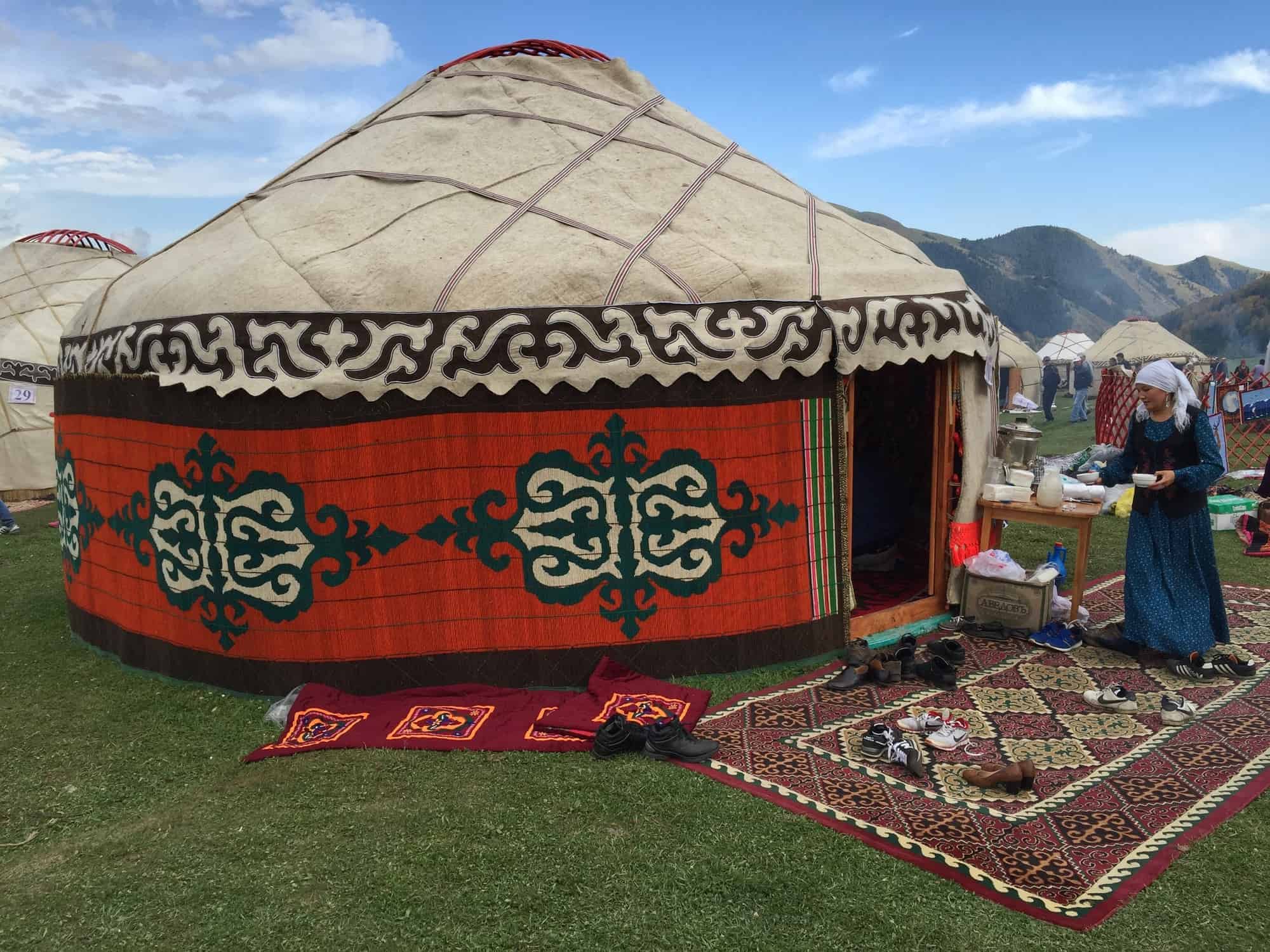
If high-intensity physical sports involving horses or men trying pin each other to the ground aren’t for you, there’s a whole other cultural segment of the World Nomad Games focused on Kyrgyz and nomadic cultures, crafts and games.
How to do it: Read our World Nomad Games Beginner’s Guide with details on how to organize a trip to see the World Nomad Games and what sports and experiences to expect there.
14. Eat “Five Fingers” (Beshbarmak)
This traditional Kyrgyz dish, known as “5 fingers,” is made from homemade noodles cooked in a broth and turned with pieces of meat (usually mutton). There are some small regional differences in this dish across the country (for example, in Naryn it’s chock-full of meat), but this nomadic dish is one that all Kyrgyz can get behind.
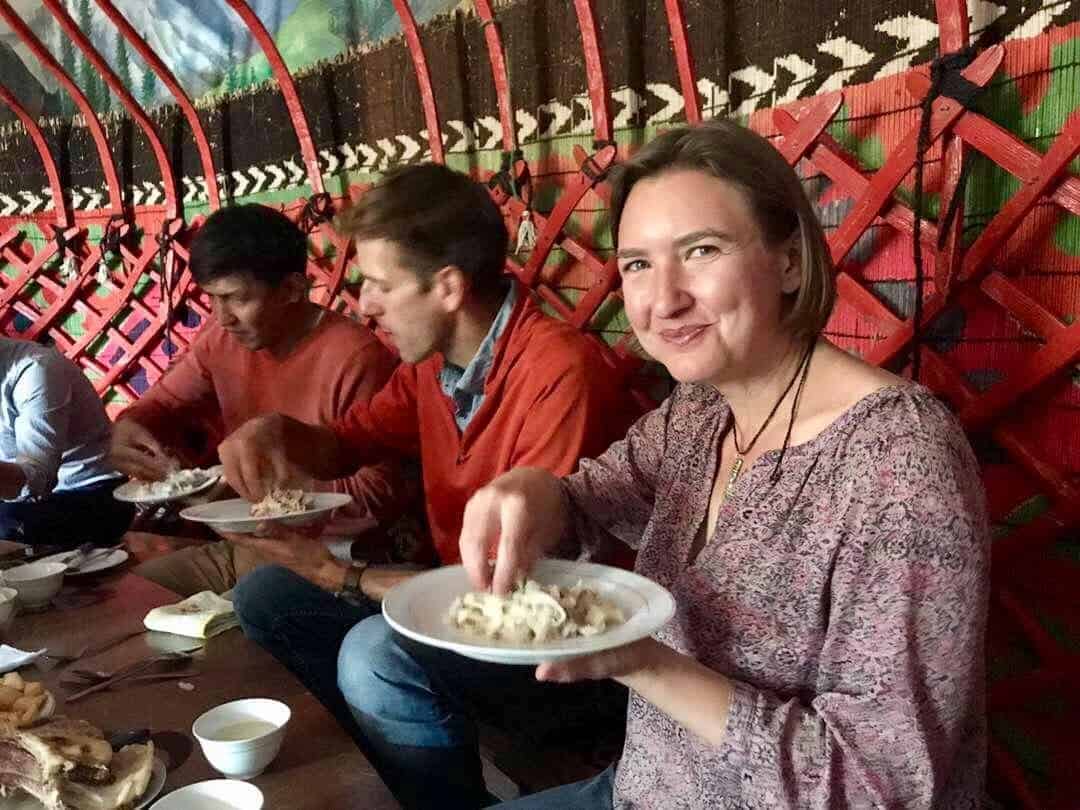
The traditional way to eat it is with your hands and in a yurt. But don’t worry, using a fork and knife is more than OK these days.
Where to find beshbarmak: Many Kyrgyz restaurants serve beshbarmak, but the best way to sample it is when it is cooked fresh for you – either up in the jailoo (high pastures) or with a cooking class. We did the Beshbarmak Cooking Class in Naryn and some yurt camps also offer cooking classes upon request.
15. Soak Your Aching Muscles in a Natural Alpine Hot Spring
Among the more enjoyable combinations in an alpine destination: mountain trekking and restorative hot springs. Near the town of Karakol, you can find a couple of options, including the mountain trek of Altyn Arashan, which includes a night in a yurt or simple hostel paired with soaking in a hot spring pool.
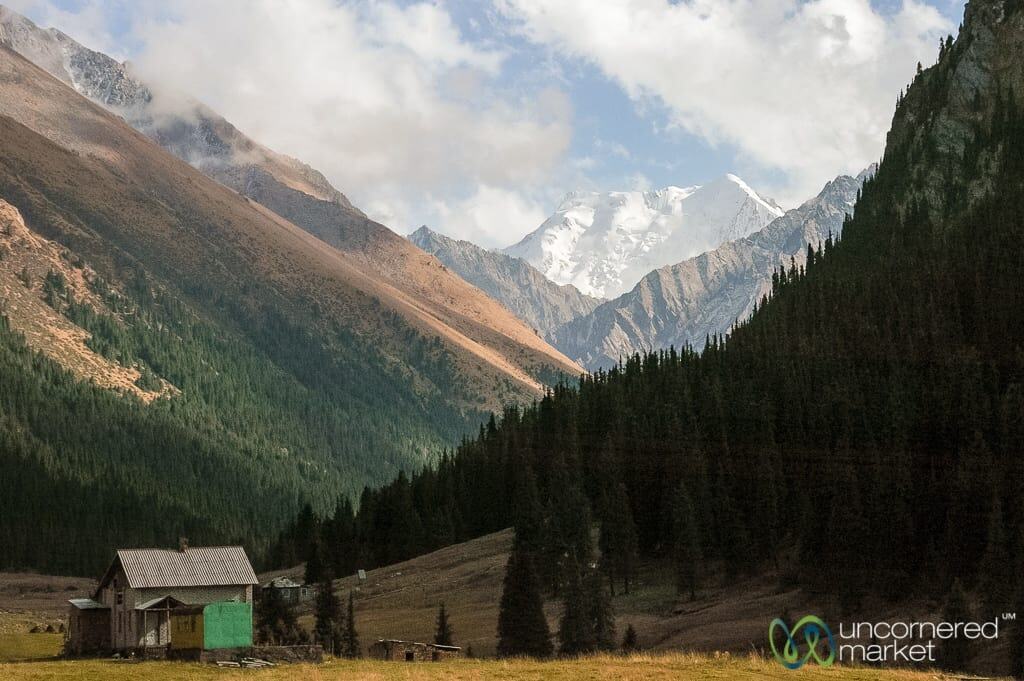
Alternatively, after your hike, or just because, you can seek out Ak-Suu, another hot springs village close to Karakol. Relax, warm up and chill out at an outdoor hot spring pool with the mountains all around you. Either way, the sulfurous mineral waters are good for what ails your trekked-out or otherwise stressed-out muscles and bones.
16. Take a Dip in the 2nd Largest Alpine Lake in the World, Lake Issyk-Kul
Two choices here — along the northern shore where there are several spas and developed beach areas in and around the town of Cholpon-Ata or along the lake’s south shore where you’ll find plenty of shoreside clearings from which to take a walk or jump in.

Our vote is for the south shore (Tamga and Kaji-Say beaches are recommended) as it's less crowded and without the big resorts, but if you want a taste of the Soviet-meets-Kyrgyz spa experience then give the north shore a try as well.
Either way, you’ll have an incredible view of the Tian Shan Mountains to keep you company during your swim in waters purported to possess special healing powers.
17. Discover Dungan Culture and Cuisine in Karakol
Spend some time in Karakol and learn about the Dungan people and their presence in Kyrgyzstan. Originally from China, the Dungan people emigrated to Karakol in the 1880s and have preserved their cuisine, culture and traditions over time.
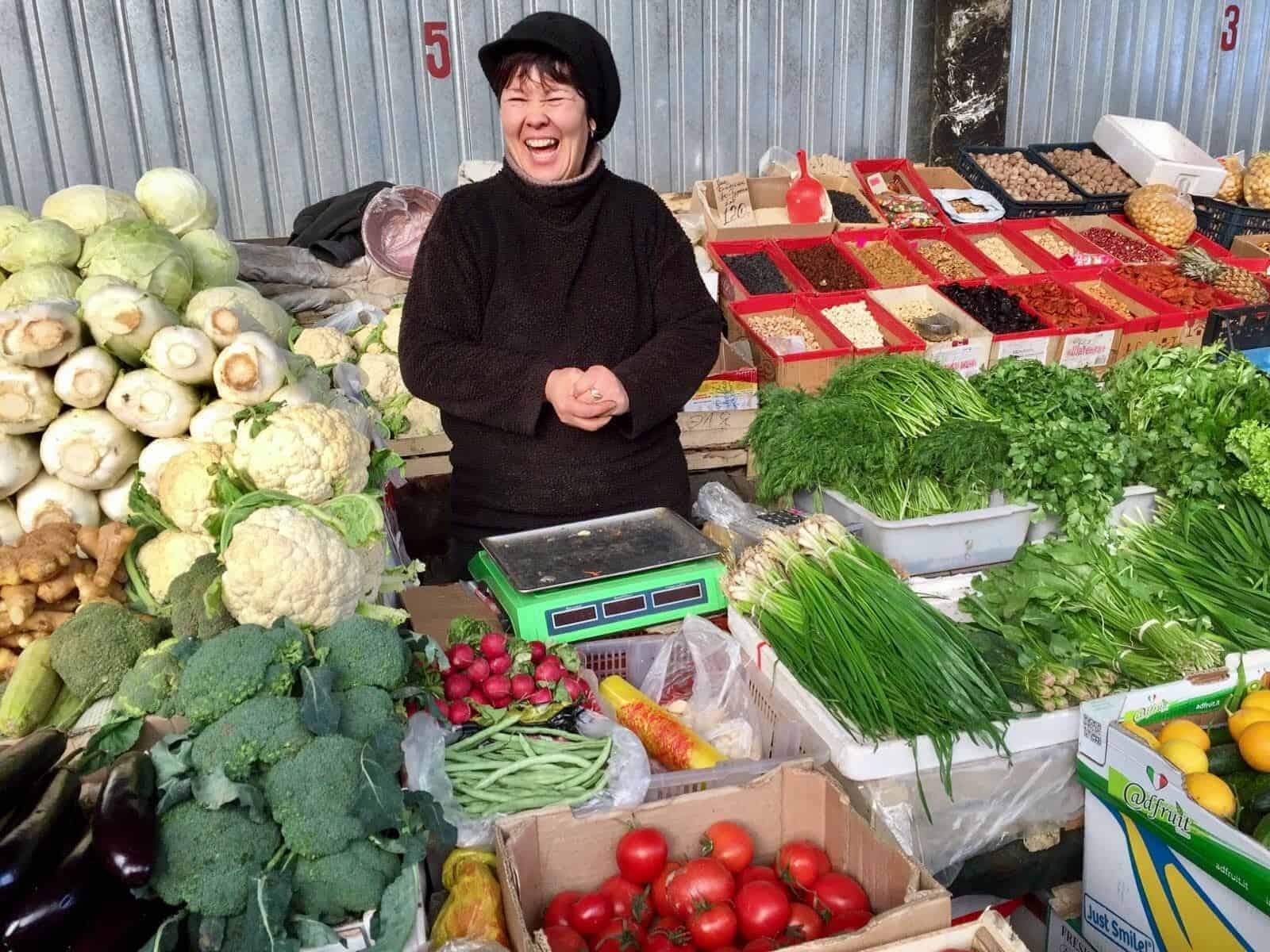
Particularly as you make your way around the Karakol Big and Little Bazaars, you’ll find Dungan vendors and influences everywhere. Karakol in particular and Kyrgyzstan in general owe a nod to the Dungan culture for its impact on the national and regional cuisines.
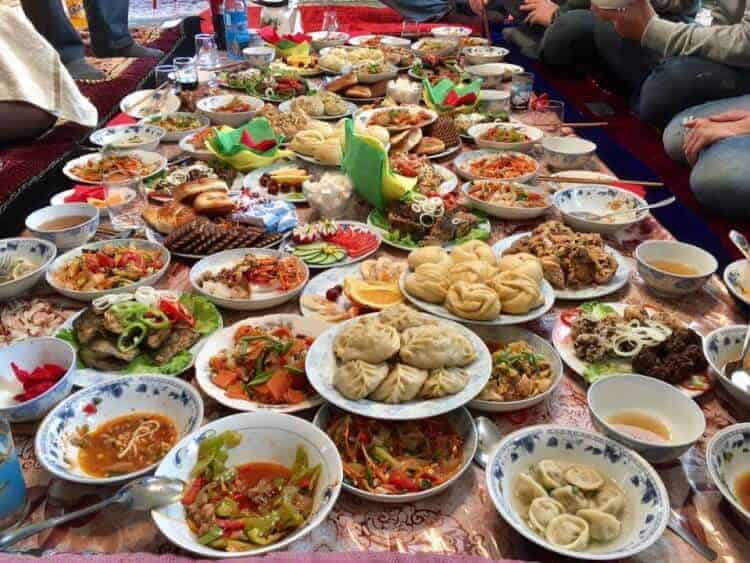
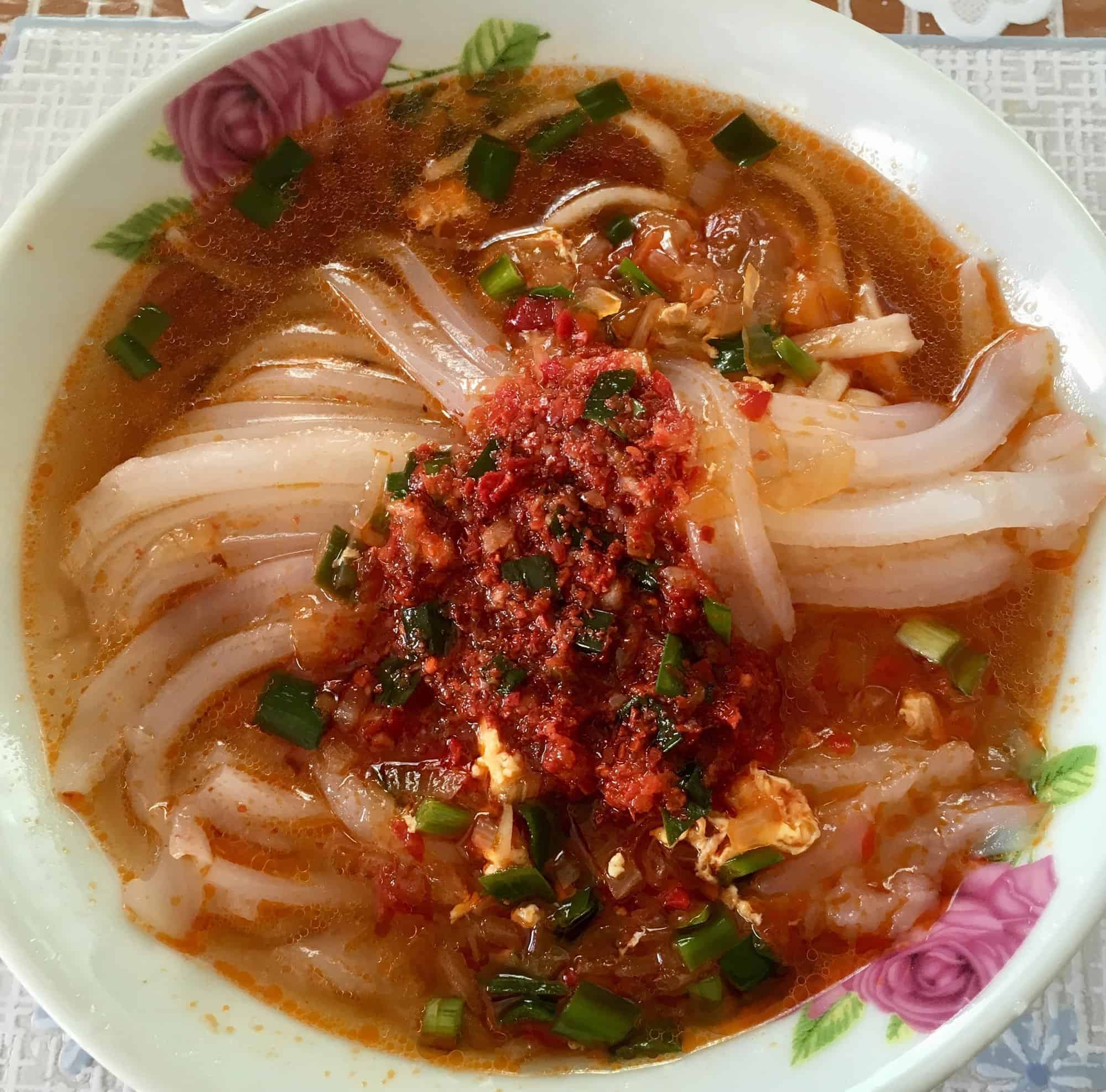
One of the best — and tastiest — ways to experience Dungan cuisine and hospitality is by joining the Dungan Village Visit and Family Dinner tour organized by Destination Karakol. You'll visit a Dungan village outside of town and learn about their history and culture through a brief walking tour, followed by the main event — a home-cooked Dungan feast with a minimum of eight dishes. Impressive and delicious.
You'll also have a chance to to learn how to make your own ashlan-fu, a famous Dungan cold soup in a vinegar broth made with noodles, potato starch, and various herbs and spices. It's delicious all the time. We also hear it's a particularly effective hangover cure. Dungan apple vinegar is always homemade; each family maintains a secret recipe.
18. Blaze a New Trekking Trail in Jyrgalan Valley
Trekking in Kyrgyzstan’s Jyrgalan Valley is one of the new mountain experiences available outside of the town of Karakol (60 km). Not only is this a beautiful (and not very crowded) area to go trekking, but Jyrgalan village itself has an interesting story — from dying coal mining village to trekking and outdoor adventure center in just a few years.
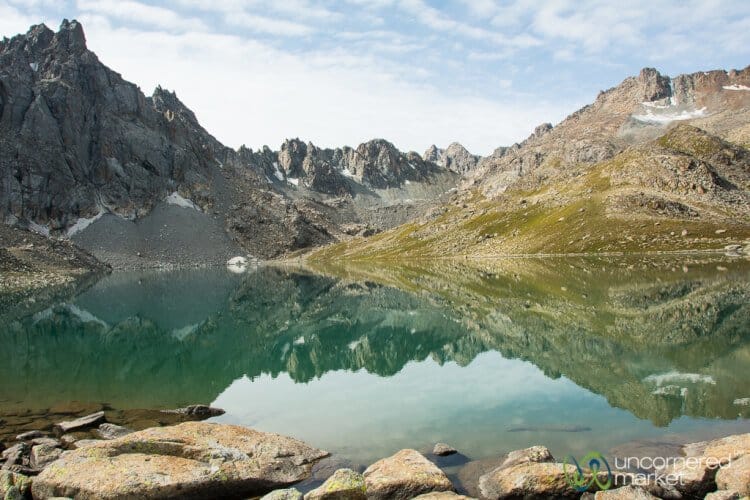
There are now a handful of day and multi-day treks (and horse treks, if that's your thing) that leave from Jyrgalan village itself. The trail that we took – the Boz-Uchuk Lakes Trek – winds 55km (33.5 miles) over three days through the Terskei Ala-Too Range of the Tian Shan Mountains of eastern Kyrgyzstan, over mountain passes, across river valleys and up to alpine lakes.

Local people have been trained as mountain guides and horse handlers and accommodation in the village is mostly through family guest houses and home stays. So, you know that your tourism money is staying local and contributing to local families.
How to organize a trek in Jyrgalan Valley: Read our Jyrgalan Boz-Uchuk Lakes Trek: A Beginner's Guide for all the details you need not only for the trek we did, but for trekking in Jyrgalan Valley in general. You can also check out the different day and multi-day trekking tours or horse treks available from Destination Jyrgalan, the community organization spearheading local tourism development.
19. Enjoy Yurt-Side Morning Tea
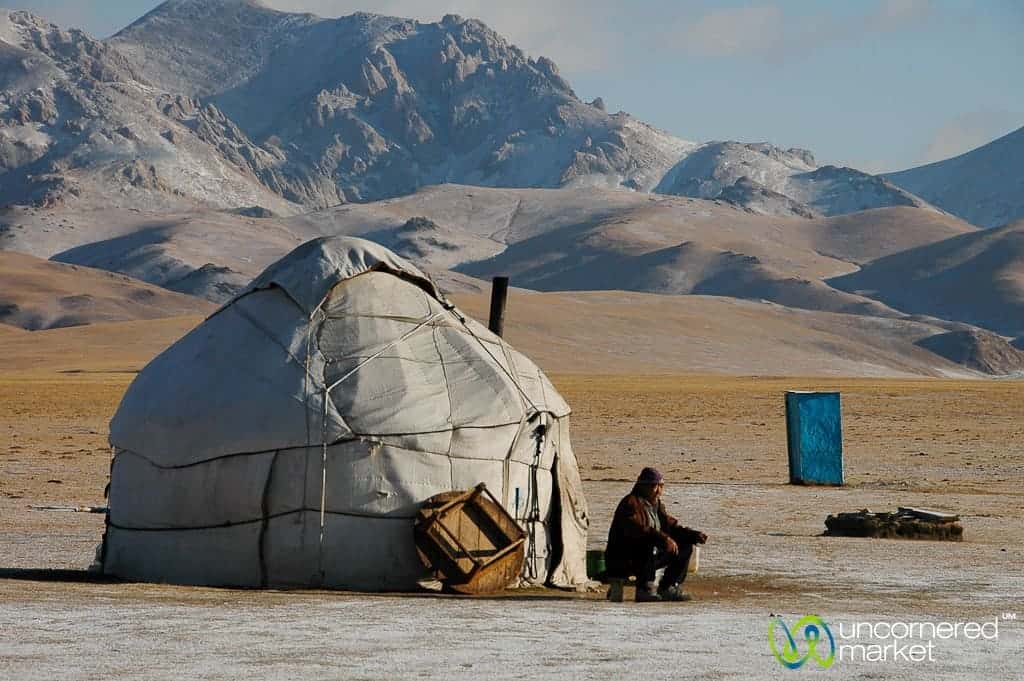
This photo, taken on the second morning along our horse trekking experience to Song-Kul Lake, captured the essence of the outdoor exhilaration meets nomadic culture that for us defines a travel experience in Kyrgyzstan. With a chill in the air, as we experienced this early autumn morning, a streaming cup of tea — the ubiquitous drink of choice in Kyrgyzstan — fit the early morning atmosphere of snow-dusted mountain peaks just perfectly.
20. Bargain for Shaggy Sheep at the Karakol Animal Market
If you find yourself in the town of Karakol around the weekend, it’s worth nudging your schedule to coincide with a visit to the Karakol Sunday Animal Market. Trading starts early – sometimes as early as 3:00 AM – in an effort to land the best animal at the best price.
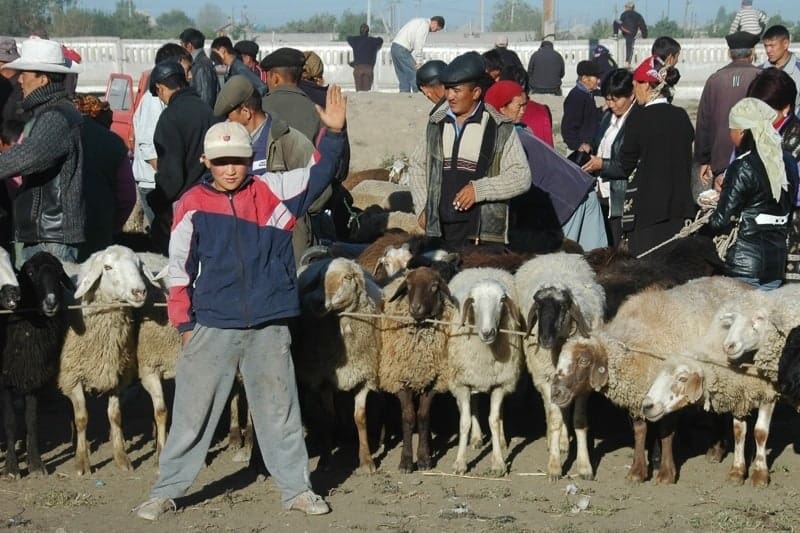
But don’t worry, you can arrive later in the morning and see what horse, sheep, goat and other livestock are fetching at today’s prices. Not only is the experience photogenic, but it offers a unique and lasting window into the eastern Kyrgyzstan region as cultural crossroads.
Animal market in Osh: If you're in southern Kyrgyzstan we also suggest visiting the Sunday animal market outside Osh. We found vendors and local people here to be really friendly, and it's fun to watch the local traditional bargaining techniques, complete with hand signals and drama.
21. Follow Horses in the Shadow of Peak Lenin
If mind-bending mountain peaks are what you seek, arrange transport from the town of Sary Tash in southern Kyrgyzstan to take you out to see some of the most breath-taking mountain scenery you’ll see outside of a trip further along the Pamir Highway. Lenin Peak (Pik Lenin) towers at 7,134 meters (23,405 feet).

22. Feel Like You've Landed on Another Planet in the Alay Mountains
Whether you're going through southern Kyrgyzstan en route to Tajikistan (see #23 below) or China, or just visiting because it's a worthwhile destination in and of itself, set aside some time to go on a trek in the Alay Mountains (or Alay Valley), a sub-range of the Pamir-Alay Mountain system. You'll be rewarded with otherworldly views and just stunningly beauty mountain landscapes in this remote region.
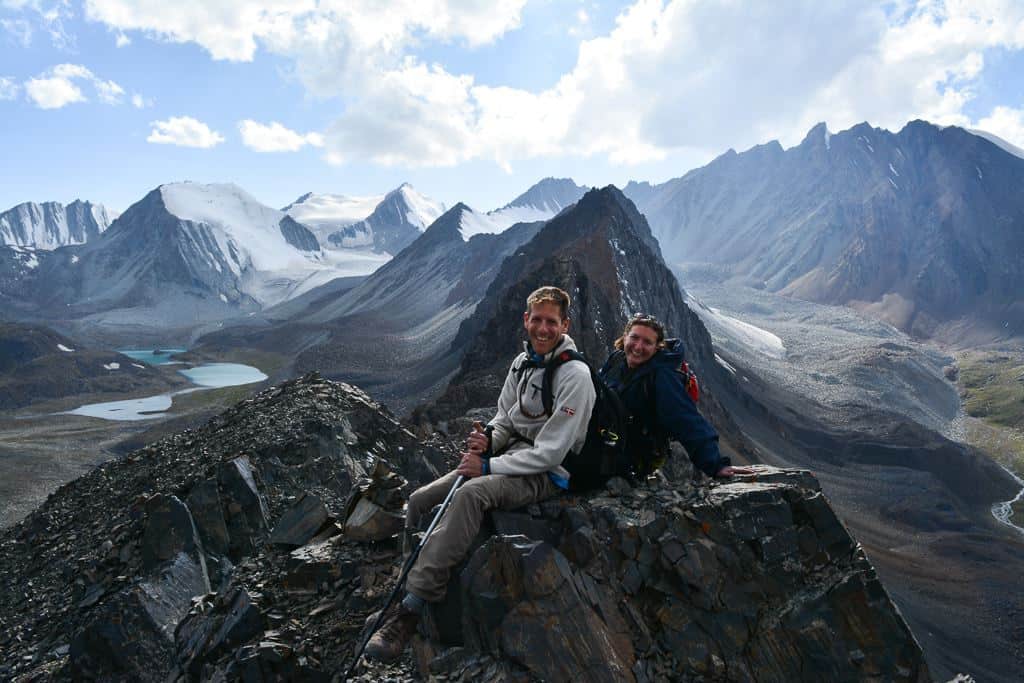
How to organize a trek in the Alay Mountains: Read our comprehensive Trekking in the Alay Mountains, Kyrgyzstan: The Ultimate Guide for everything you need to know to choose a route, organize a trek, find a guide and gear, and what to expect on a day or multi-day trek. You can also see many of trekking options and tours available at Visit Alay, the trekking agency we went with for our trek.
23. Launch Your Pamir Highway Road Trip
Arguably one of the world’s greatest road trips, the Pamir Highway from Kyrgyzstan through the northern Tajikistan region of Badakhshan and the Wakhan Valley to the border of Afghanistan is an experience of a lifetime. If nothing else stirs you, the views of the “Roof of the World” Pamirs will. That, combined with the historical backdrop and blending of cultures makes one feel as if on the edge of the universe.

The place to begin this journey is in Kyrgyzstan. A typical setting off point is the town of Osh or Sary Tash, with a driver who will help navigate the high desert mountain passes and the Kyrgyzstan-Tajikistan border in a rugged vehicle like an UAZ. If you are especially adventurous, begin your overland journey from Bishkek, crossing the mountain passes into Osh.
24. Marvel at Kyrgyz Nomadic Design and Understand the Symbolism of Kyrgyz Shyrdaks and Tush-kiyiz
The first time you walk inside a yurt, particularly a well-decorated colorful one, your inclination will be to look up and around, expanding your peripheral vision. It’s the nature of the geometry of a yurt that does this, as the shape and symbolism of the designs surround you.
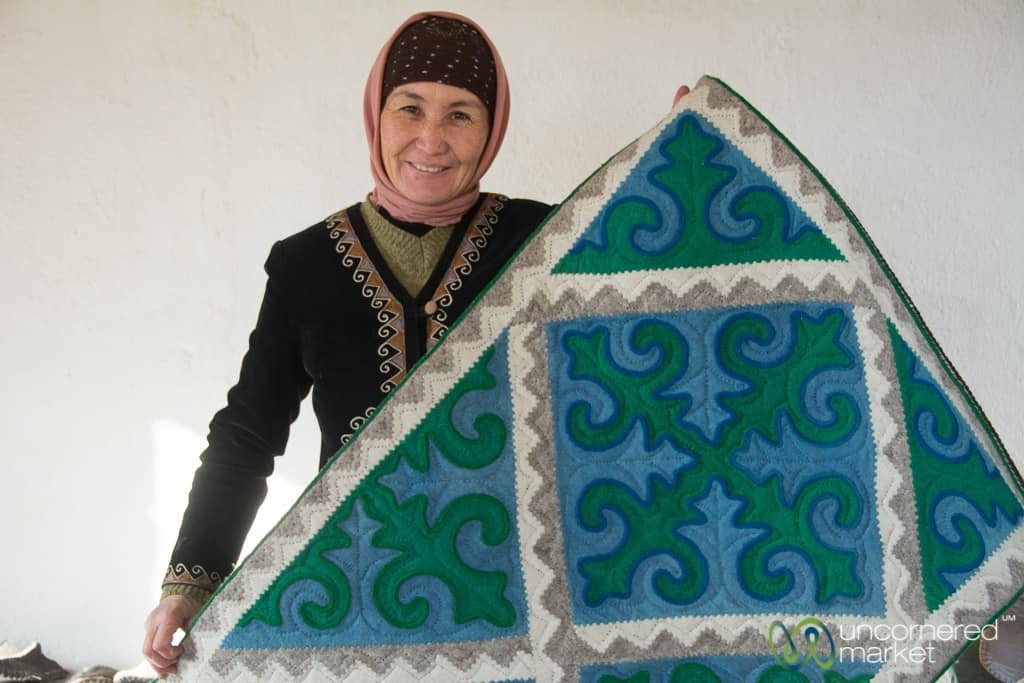
The primary decorative elements of Kyrgyz yurts – the colorful sheep’s wool felt carpets called shyrdaks and the thinner more finely embroidered design panels known as tush-kiyiz – will keep your eyes and minds engaged.

To learn more about Kyrgyz design and handicrafts consider visiting Golden Thimble (Altyn Oimak) or Almaluu Crafts Center in Bokonbaevo along the Southern Shore. You can take felt-making and handicraft classes there, as well as meet the women who make the beautiful handicrafts you see in the shops.
25. Relax on a Sunset Cruise on Lake Issyk-Kul
Relax at the end of the day or come down after a trek with a welcome drink in your hand, a handful of fried fava beans, and views of Lake Issyk-Kul and its surrounding snow-covered peaks as the sun goes down. This is the sunset cruise in Karakol. There are worse ways to end your day.

If you want a bit of adrenaline to shake things up, dive off the high deck of the boat and enjoy a swim in Lake Issyk-Kul.

26. Discover Remnants of Kyrgyzstan's Silk Road History
The Silk Road, the network of trading routes that stretched from China to Europe for over a thousand years (2nd century BC – 14th century) also went through Kyrgyzstan. In fact, Osh in southern Kyrgyzstan at the crossroads of China, Tajikistan and Uzbekistan, was considered the half-way mark for some of the routes, making it an important Silk Road trading center.

One of the best places to find Silk Road ruins and history is in the town of Uzgen, near to the city of Osh. You'll be able to enjoy the surviving minaret and mausoleum with views of the snow-covered Pamir Mountains in the distance.
Other Silk Road Sights in Kyrgyzstan: Burana Tower not far from Bishkek is another place where you can see (and climb) an 11th century minaret. Tash Rabat near Naryn is a caravanserai high in the mountains which sheltered and housed traders coming from China.
27. Find the Kids with the Wind-Burnt Cheeks in Sary Tash
If anything captures the high-mountain essence of Sary Tash, it’s the hue of the cheeks of the children who play in its streets. On the whole, you’ll find the children of Kyrgyzstan to be friendly and engaging, regardless of how much language you happen to share with them. The kids of Sary Tash are no different. And their appearance definitely echoes the idea that Kyrgyzstan was and remains a crossroads between the various Turkic-Mongolian countries that neighbor it and the whole of East Asia.

Bonus: Find the Soviet Murals in Bishkek
Besides enjoying the taste of the big city, one of the finest experiences of Bishkek once included the walls and ceilings of the History Museum (originally referred to as the Lenin Museum). Incredible Soviet murals illustrated propaganda as art to its fullest. Whether it was the arms race and fear of nuclear war or the specter of the West, the feelings and fear are clear.

We’ve been told that the murals have been removed, but not destroyed. Nobody we know knows where they are…yet. If you find them, let us know. Perhaps if enough travelers ask the History Museum to bring them back, they will?
Visas to Kyrgyzstan
Fortunately, Kyrgyzstan makes it easy when it comes to visas. Their visa-free regime applies to citizens of 60 countries and usually provides 30-60 days in-country. For other nationalities, there is an e-visa program so that you can take care of everything online before you arrive. Check the visa requirements for your nationality here.
How to Get to Kyrgyzstan
Depending upon where you're traveling from, it might be a bit of a journey to get to Kyrgyzstan. But, increased flight routes and eased border crossings means that it's getting easier and faster. It really isn't as far away as it may sound.
Flying to Kyrgyzstan:
Bishkek airport (FRU) is the main airport of the country with the most options for international flights. If you're coming from Europe or North America, usually the fastest (and cheapest) way is to fly Turkish Airlines through Istanbul to Bishkek. There are also other options through Dubai and Moscow. If you're coming from Asia or Australia, China Southern, Air India and FlyDubai offers a good selection of flights.
You can check your flight options and prices on Skyscanner as it also includes all low-cost airlines.
Overland travel to Kyrgyzstan:
Kyrgyzstan is nestled between Kazakhstan, China (Irkeshtam and Torugart passes), Tajikistan and Uzbekistan, meaning there are a lot of options to travel overland from neighboring countries. Usually, it's best to arrange transport — bus, shared taxi or private taxi — all the way to the nearest big city or town in Kyrgyzstan. But, it's also common that shared taxis or marshrutkas hang out on the Kyrgyz side of the border so you can walk across the border and catch public transport to the next town.
Caravanistan provides a good overview of transport options in Kyrgyzstan, as well as the whole of Central Asia.
Accommodation in Kyrgyzstan
The options for accommodation of all types and budgets has increased tremendously over the last ten years, as has the ease and flexibility of being able to book online. In addition, any of the DMOs mentioned above (Karakol, Osh, Jyrgalan and South Shore) have accommodation listings on their websites and can assist you in booking a room for you. CBT Kyrgyzstan offices around the country can also help book you into their member accommodations.
The bigger cities (Bishkek, Karakol and Osh) will have more luxury hotel options, as well as basic hostels and guest houses. Once you get into smaller towns and villages, accommodation will mostly be family-run guest houses, yurt stays and homestays. These are usually simple affairs, but you'll have an opportunity to interact and engage with a local family and get a glimpse into their lives. And, as we mentioned above, yurt stays are a must-try at least once during your visit to Kyrgyzstan.
Recommended hotels and guest houses in select cities in Kyrgyzstan:
- Bishkek Hotels: On the higher end, we recommend Solutel Hotel as the rooms are spacious and the staff is incredibly helpful and friendly. For more mid-range accommodation we've heard good things about Futuro Hotel and we've also stayed at Shah Palace. If you're looking for budget accommodation or hostels, friends have recommended Apple Hostel (rumors are they sometimes run cooking classes and food tours) and Interhouse Bishkek or City Center. Find a room in Bishkek
- Karakol Accommodation: On our most recent visit to Karakol we stayed at Matsunoki Guest House, a Japanese-styled place that has very comfortable beds, an incredibly huge and delicious breakfast, soundproofing to keep it quiet, and a Japanese minimalist design. Highly recommended. We've also stayed at Hotel Tagatay a few times and it's a nice mid-range guest house with a super friendly owner that uses solar and other renewable energies for heating its hot water and electricity. For budget travelers there's a range of hostels in town, or if you want to experience sleeping in a yurt give Happy Yurt Camp a try just outside the town center (disclosure: we haven't stayed there ourselves, but know the owner.) Book a hotel in Karakol
- South Shore of Lake Issyk-Kul Accommodation: In Bokonbaevo, the sort of regional center, we've stayed at Emily Guesthouse several times. The family who runs it is incredibly sweet and they serve good, home-made food for a reasonable price. Also in Bokonbaevo is Altyn Oimak Guest House by the family that runs the handicrafts workshop of the same name For a yurt camp experience not far from town, try Almaluu Yurt Camp (try the VIP yurts with a sauna attached), Bel Tam Yurt Camp (right on the shores of Lake Issyk-Kul) or Feel Nomad Yurt Camp (on the shore of the lake near Ak-Say). And, for a more remote yurt experience we recommend Manzyly-Ata Yurt Camp (the first yurt we slept in 11 years ago) and we've also heard good things about (and know the owner at) Jaichy Yurt Camp that is up on a jailoo (high pasture) about 45-minutes away from Bokonbaevo. Book accommodation in South Shore
- Osh accommodation: We've stayed at and can recommend Classic Hotel, Shanghai City Hotel (free laundry and a good Chinese restaurant with vegetarian food), and Sunrise Guesthouse. In terms of budget accommodation and hostels, we've heard good things from a friend about Biy Ordo Guesthouse, but it's a bit outside of town. Closer in is its sister accommodation Biy Ordo Hostel and Osh Guesthouse. Book a room in Osh
- Jyrgalan accommodation: As this is a small village, family guesthouses make up the majority of accommodation here. And, that's actually a good thing as you know you're contributing to the income of local families and you have a more personalized experience. We've stayed at and can recommend Alakol-Jyrgalan Guesthouse, which is the biggest accommodation option in town with the most services. But, check out some of the smaller family guesthouses as well.
- Naryn accommodation: On our recent visits to Naryn we've stayed at and enjoyed Khan Tengri Hotel a bit outside the center of town. We were comfortable in rooms in the older or original building, but we have heard that rooms in the newer shipping container building tend to be rather loud and cold. For budget accommodation, there are a handful of family guesthouses around the city. Book a room in Naryn
I’ve heard so many great things about Kyrgyzstan lately and it’s definitely been getting bumped up higher and higher on my bucket list. This is a really helpful guide you’ve put together.
Thanks, Melissa! Glad you find this guide to exploring Kyrgyzstan useful. Hope it helped push it even higher on your travel wish list 🙂
Hi Dan and Audrey!
Thank you again for your wonderfully detailed and enthusiastic posts about “undiscovered” places that are off-the-beaten track. You have inspired many of our travels in recent years (Peaks of the Balkans was fantastic!), and, because of your blog, we are thinking about heading to Kyrgyzstan in the summer of 2019. I am sure that we will have many questions as we get into the specifics of organizing our trip, but I have one in particular that I wanted to ask you as we get started. We will be in Kyrgyzstan for approximately 5-6 weeks and primarily want to go trekking and enjoy natural places. Many of the articles and blogposts I am reading suggest contacting local CBT offices after we arrive in Kyrgyzstan. Do you advise this as well? Or do you think it is better to plan everything out with the CBTs prior to arriving in Kyrgyzstan?
Thank you in advance for any insights you can offer us!
Best,
Alison and Matt
Hi Alison,
Great to hear that you are planning a big trekking trip to Kyrgyzstan next summer! I would suggest perhaps a combination – arranging some things with CBT in advance and some things to organize on the ground. If there are specific multi-day treks that you definitely know you want to do then I would contact the local CBT or DMO office in advance to secure whatever support you need from them – guides, trekking/camping gear, accommodation, etc. I suggest this as in high season it can happen that they run out of local guides or trekking gear. However, for day hikes or smaller treks you can probably organize all of that on the ground. This would provide you with some flexibility in your schedule in case you want to move some things around. Have a great trip!
I’m travelling on 22 November 2018. Do I required Vaccine to travel in Kyrgyzstan?
Thank you.
Kyrgyzstan will not check your vaccination book when you enter the country. However, it is best to have vaccinations like Hepatitis A and Typhoid. CDC is a great source of travel health and vaccination information for countries: https://wwwnc.cdc.gov/travel/destinations/traveler/none/kyrgyzstan
hey Audrey
we d love to visit Kirgistan. Our next holidays are in December. Would you recommand to go in winter? or we better wait?
i m Swiss, so i love snow, but road migth be difficult to pass or the mountains not accessable?
best regards
Hi Josephine,
We have visited Kyrgyzstan before in December and it is a beautiful time as all the mountains are covered in snow so everywhere you look is like a winter wonderland. The main roads in the country — e.g., to/from South Shore of Lake Issyk-Kul and Karakol — are open and it’s no problem to get around. But, some of the smaller roads to villages might be a bit more challenging depending upon the snowfall. If you enjoy skiing you should try out the ski resort just outside of Karakol or go to Jyrgalan (60 km away) for freeride skiing and snowboarding. There are a couple of yurt camps near Bakonbaevo along the South Shore if Issyk-Kul that are open in the winter and have saunas attached to the yurts. Quite a cool experience. If you go, let us know how your experience is in the winter!
Hi Dan and Audrey, love reading your blog!
I am planning to go to Kyrgyzstan in July or August and would like to ask if it is necessary to book treks in advance? I am keen on the Ak Suu Transverse and am wondering if it will be a lot more affordable if I book it when I am in Jyrgalan rather than over email. Thank you!!
Li, the prices with Destination Jyrgalan are the same whether you book it in advance or when you arrive. July and August are usually high season, so if you want to be sure to have your guide and everything confirmed and secured then I would recommend sending them an email in advance to start the process. However, if you want more flexibility with your schedule then you can wait until you get to Kyrgyzstan, but you may have to adjust the dates of your tour based on availability. The Ak Suu Traverse trek does look pretty amazing so I hope you have a chance to do the trek!
Hi Audrey
I really want to visit this country. I want to get some informations, From Karakol to you did trekking 3 days or 4 days. I want Karakol- Ala Kol lake- Altyn Arashan 3 days. How is difficult this way? CBT Karakol can arrange this tour, but the price too high, I found more cheaper tours with Pegas Adventure. How do you think, trekking is better or horseback riding. But I don’t have experience
Hi Radrigo,
Great to hear that you are interested in visiting Kyrgyzstan! The 3-day trek from Karakol – Ala Kol Lake – Altyn Arashan is of medium difficulty. If you are used to walking a lot and have some experience at altitude then you should be fine. As to your question of a trek on foot vs. horseback riding, that’s a personal preference. We prefer trekking on foot, but we also know people who prefer going by horseback as they find it less strenuous and it’s a different type of adventure. However, horseback riding tours are usually more expensive than treks on foot as they require horse rental, so if cost is a concern then perhaps a regular trek might fit your budget better.
Reading this brought back so many memories… I too was taken by Kyrgyzstan and have been twice, once for the World Nomad Games which absolutely rank as one of the top 10 experiences of my lifetime! I spent two weeks zigzagging the country and crossed into Uzbekistan at Osh. Someday I’d love to return and head the other way, to Tajikistan. This entire region is so special! Very dear to my heart. Thank you for taking me back 🙂
Leyla, glad this article brought back good memories! Kyrgyzstan is also very close to our hearts and we hope to be able to return to the mountains at some point. Tajikistan is also quite special, especially the Pamir Mountains. The Pamir Highway road trip is one of our favorite road trip experiences.