Last Updated on April 21, 2024 by Audrey Scott
“The folds of Bolivia’s beauty – and its contradictions and struggles — defy a story line.” — Our thoughts in Bolivia, First Impressions
Bolivia may defy a story line, but it sure does beg a visit.

It doesn’t usually occur to us to present false dichotomies like we do in the title, but questions like these are the ones that Bolivia seems to raise. It's a conflicted place and it left us similarly so.
Bolivia's landscape is stark and stunning in turns. So are the people. In Andean South America, Bolivia is the poster child of diversity, whether in regards to ethnicity, culture, clothing or politics.
But for all this, you pay a price. The high altitudes of the altiplano and salt flats humble you into understanding the limits of your body: your head feels dizzy, you run out of breath. For a host of cultural and historical reasons, indigenous communities often view travelers suspiciously. Some people even throw tomatoes in the direction of unwelcome shutterbugs.
Make no mistake, Bolivia doesn’t slot in as the world’s easiest travel destination. But it certainly does stimulate. It will make you think — and if you give it a chance, it just might profoundly impact and inform your view of the world.
For us, that's plenty reason to visit.
But in case you need further convincing, we offer our photo essays and a summary of what we experienced in Bolivia.
Lake Titicaca – Blue Skies, Blue Waters
At 3,800 meters, Lake Titicaca stands as one of the highest, largest, and deepest lakes in the world. And if you take it all in from Bolivia's Isla del Sol, something beautiful. Deep blue skies hang above inky fresh waters, clouds pop over a lonely landscape, and the whole scene is wrapped by the 20,000 foot snowcapped mountains of the Cordillera Real.
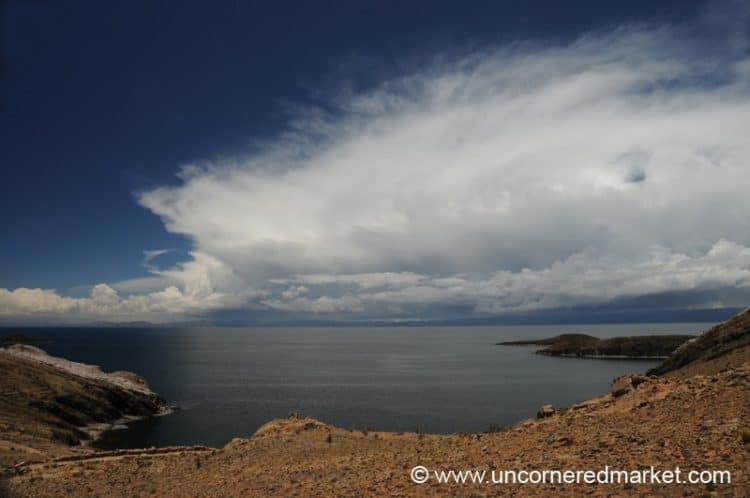
It's one thing to admire the lake from the shores of Copacabana, Bolivia's main outpost on the lake, but it's another to hike the length of Isla del Sol. Breath-taking, quite literally.
Because of the altitude — a lung-aching 3,800 meters (12,500 feet) — you can feel the burn, but the amazing views make it all worth it. Go slow, appreciate the villages, the people, the donkeys, the llamas, the history.
Our suggestion: take a boat from Copacabana to the northern side of Isla del Sol and hike to the village of Yumani on its southern edge. The walk offers great views of the lake and a few sites of reconstructed Incan ruins.
Although Yumani has experienced a bit of a boom in guest house construction recently, you can still see pack donkeys carrying supplies through town and young girls shepherding llamas from the fields.
After an overnight stop, hire a boat in the morning to take you to the village of Yampupampa on the mainland. From there, hike the remaining ten miles / 17km back to Copacabana. Along the way, it's a different world: villagers rely mainly on agriculture, livestock and trout fishing.
So if you find yourself in Bolivia, take in Lake Titicaca. And if you find yourself at Lake Titicaca, be sure to take a long walk. And be sure to celebrate your hiking accomplishments with some freshly grilled trout on the shores of Copacabana.
Compare prices at hotels in Copacabana.
La Paz
How many other major cities feature a 6,400 meter (21,000+ ft) snow-capped mountain (Mt. Illimani) looming over it?
The surrounding landscape is full of hills, red rocks, and crags — all of which spill into a giant bowl of a valley. When it comes to dramatically set major cities, it’s difficult to beat La Paz.
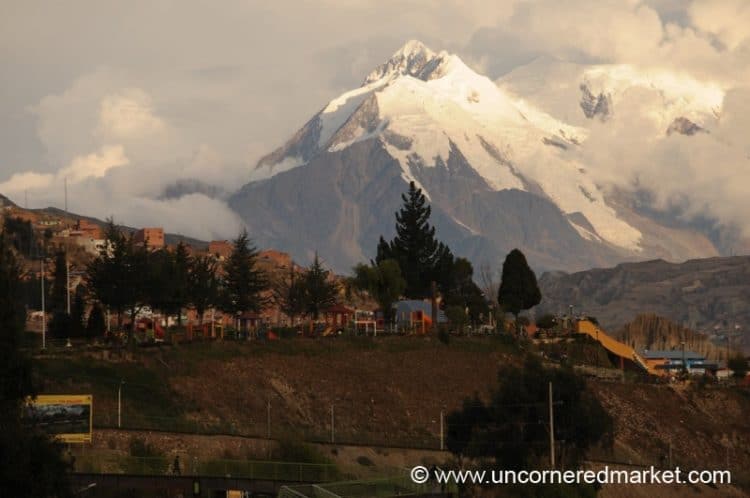
While the setting of La Paz is undeniably amazing, what really struck us was the city's mix of indigenous people, bustling market culture, and seemingly cosmopolitan caches of tall buildings. While other big cities in South America (e.g., Lima, Peru and Quito, Ecuador) have some of these features, La Paz seems to inimitably integrate it all.
Compare prices at hotels in La Paz.
Cochabamba and Chapare
Cochabamba doesn't qualify as our favorite city in Bolivia (watch out for your belongings in the market!), but it does serve as a jumping off point for the Chapare region and the Bolivian jungle.
Consider a visit to Inti Wari Yassi animal sanctuary near the town of Villa Tunari in Chapare. Hang out with monkeys and other animals rescued from circuses or donated by people who realized that taking care of a full-sized bear is no easy feat. If you have some time, you can volunteer at the sanctuary as well. Word has it that they are short on staff.
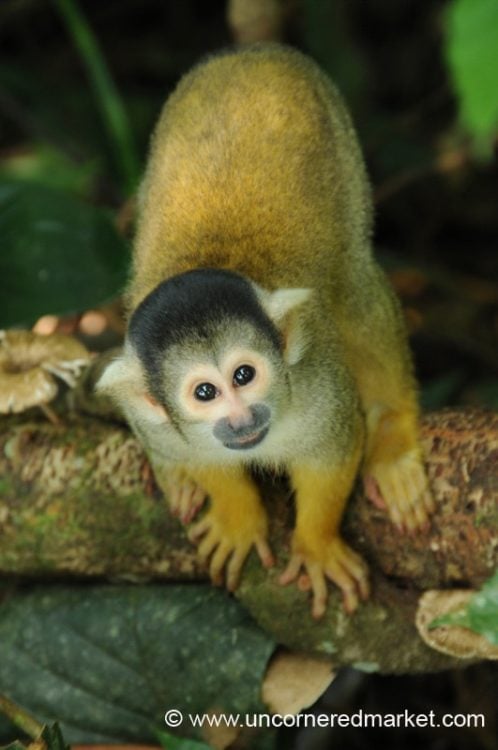
Chapare also serves as Bolivia's coca leaf production center. You may or may not see any coca growers during your visit, but it’s interesting to understand how the cocaine production lifecycle begins in a place like this.
Compare prices at hotels in Cochabamba.
Salt Flats and High Deserts
If your time in Bolivia is limited, get on down to Tupiza in the south and take a 4-day jeep tour across the high deserts and salt flats to Uyuni. The landscape is some of the most unique and beautiful we’ve come across on our three years on the road. Mother Nature really outdid herself here with a palette including red and green lakes, snow-white salt fields and azure blue skies.
Read the full story about our Salar de Uyuni tour .
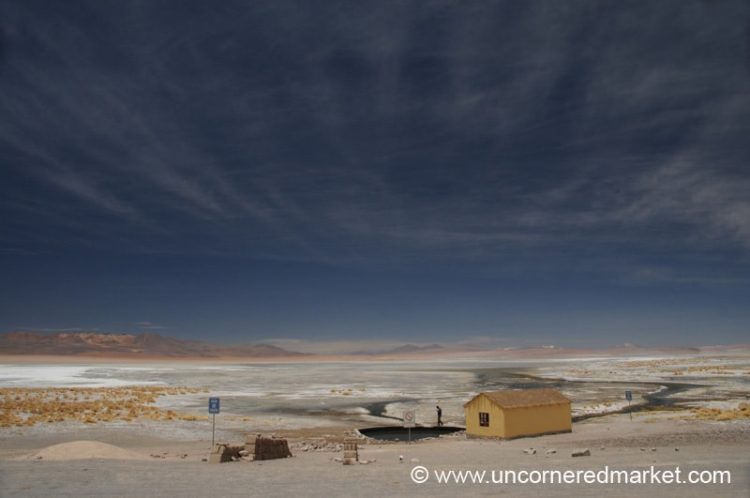
Compare prices at hotels in Tupiza and Uyuni.
Sucre
From the moment we arrived in Bolivia, people raved about Sucre. Yes, it’s a pretty colonial city with white buildings, churches, and a central plaza reminiscent of Europe. However, when we consider Sucre, we don't find ourselves reaching for superlatives. It’s a comfortable city in which to spend a few days, cobble together a Thanksgiving meal, visit the excellent Museum of Indigenous Art, and perhaps stop by the Sunday indigenous market in nearby Tarabuco.
Note: In Tarabuco, be careful with your camera; locals are decidedly photo-unfriendly. Although we enjoyed our visit and emerged unscathed, fellow travelers had tomatoes and rocks thrown at them when they brought out their cameras.
Compare prices at hotels in Sucre.
Potosi
Locals will remind you that nearby Potosi was once larger, richer and more famous than either London or Paris. 500 years later, the mines still operate and attract travelers. The mine tour is by no means upbeat (it's not intended to be), but offers an opportunity to see and experience the conditions that miners subject themselves to on a daily basis. The whole experience is a window onto their lives, dreams and fears.
Compare prices at hotels in Potosi.
Tarija
If the thin air and indigenous Andean communities of the altiplano leave you light-headed, may we suggest a visit to the southern Bolivian city of Tarija for a vacation from your vacation?
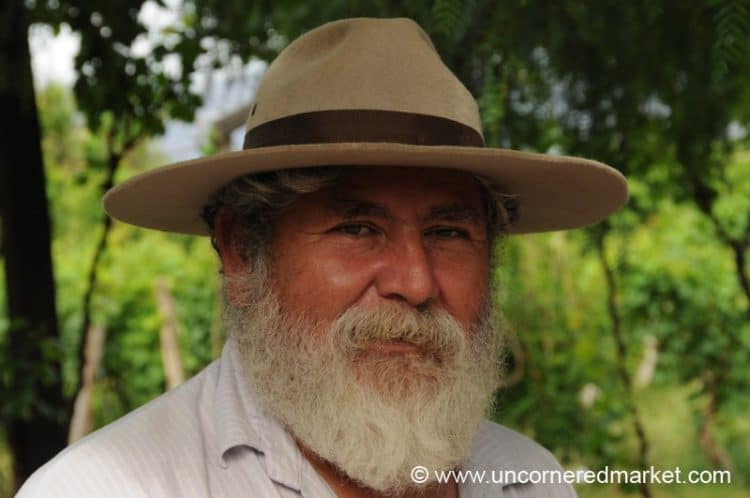
Although Tarija may not feature any particularly notable sights, its friendliness, laid-back attitude, wine culture and attention to food makes it feel downright Mediterranean (minus the beach). Recharge your batteries by hanging out with people like this:
The photos are stunning! Isla del Sol provided us with the most beautiful pictures of our trip so far. The sky, lake and land were all perfect. I still look at the photos in amazement. We were only able to jump into Bolivia for a few short days while visiting Cuzco, but we plan to go back after visiting Patagonia and Buenos Aires on our way back to Ecuador. The Salt Flats are top on my list. Thanks for sharing.
I fell in love with Bolivia while watching an episode of Bizarre Foods on the Travel Channel, almost booking a ticket when the show ended. Since then, I have been dying to visit the country and soak it all in–the language, the landscape, the people, the culture, the customs, everything. James and I finally got there during our RTW trip in Oct and I was far from disappointed. Bolivia is an amazingly raw, open country. I fell in love all over again.
PS And the Salt Flats tour was one of the most amazing experiences I have ever had.
@Jason: Definitely do not miss the Salar de Uyuni and be sure to go from Tupiza to Uyuni (not the other way). Enjoy!
@Johanna: Glad to hear that you enjoyed Bolivia. Raw is a great word to describe the country. That rawness certainly helps to make the Bolivia the experience that it is. Funny that you mention bizarre foods. We received a couple of emails from readers mentioning that their first introduction to Bolivia was from Bizarre Foods. I’m surprised though because we didn’t find the food particularly bizarre (maybe we just spent too much time Ecuador and Peru).