Last Updated on April 26, 2024 by Audrey Scott
We apologize for the silence on our blog over the last week. Our travels across Iran, while rich and deeply fulfilling, have teamed up with slow and censored internet, a blistering pace of full days that end late, and an attempt to process it all that feels like a slow drip.
Now that we've dispensed with the excuses, we offer a few snapshots of our journey to not-so-traveled Western Iran — Hamadan, Kermanshan, and Ahvaz — where our path through the country begins.
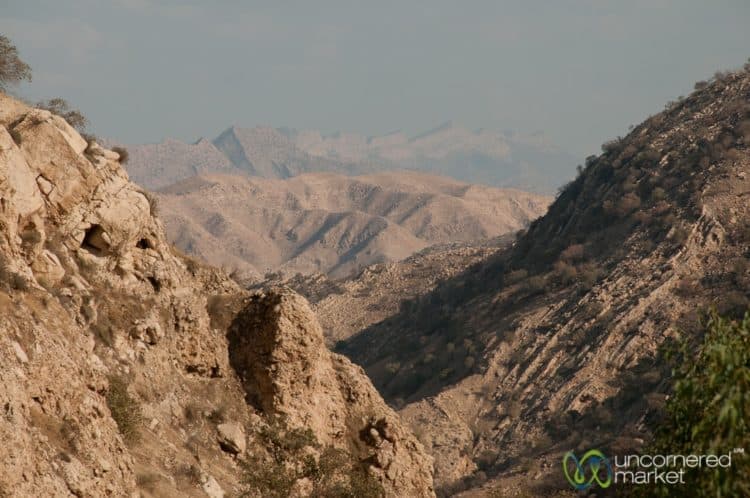
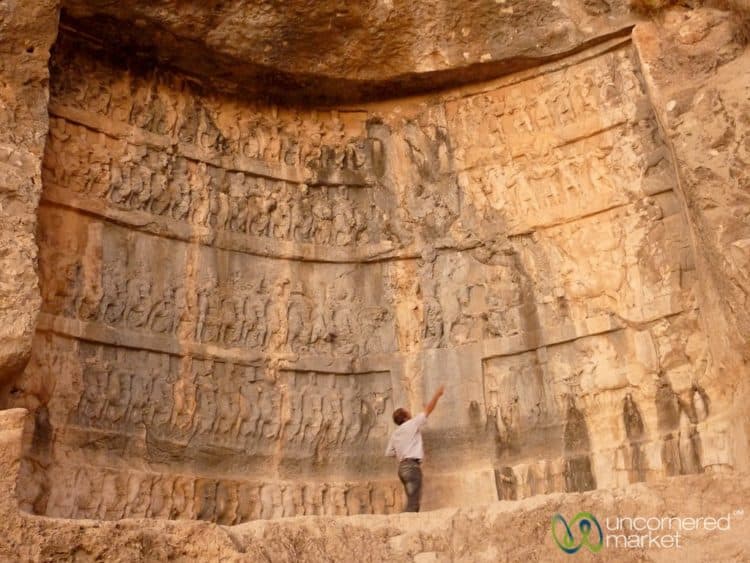
Our road trip took us from Tehran west then south though ancient, pre-Islamic civilizations — the Elamite Ziggurat of Tchogha Zabnil (1250 BC), Tomb of Esther (yes, the Esther from the bible), remains of the Achaemenian dynasty at Susa (Shush) (6th century BC), reliefs of Achaemenian King Darius the Great at Bisotun (6th century BC), and the Sassanid Empire sites of Bishapur city and Taq-e Bostan rock reliefs (3rd-7th century AD).
Use caution the next time you use the word “old.”
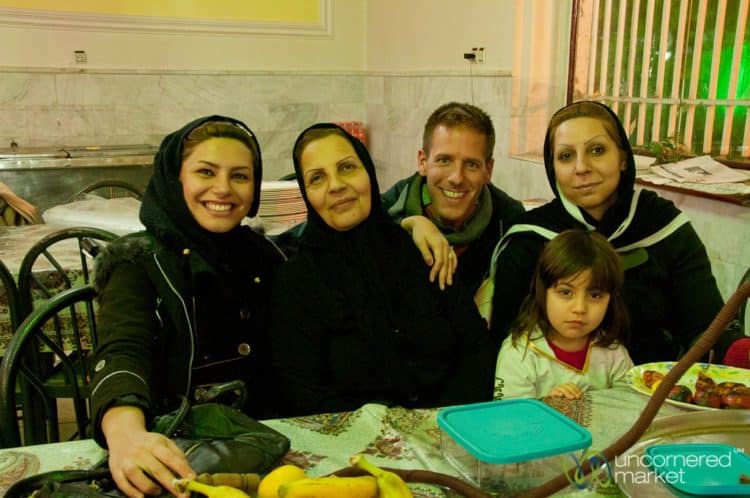
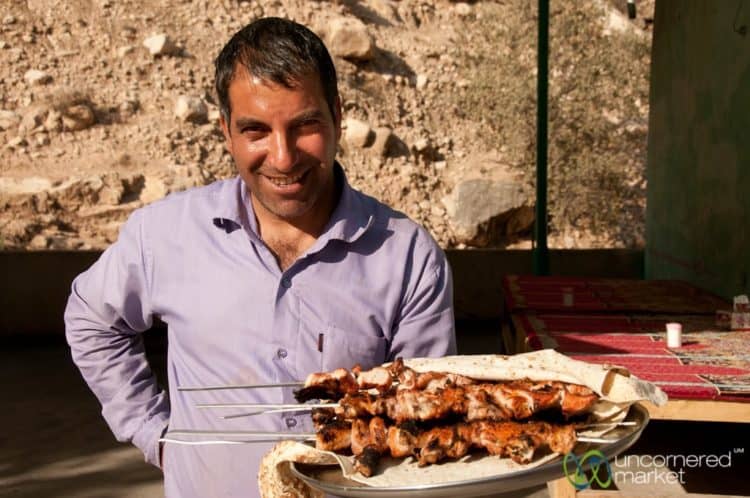
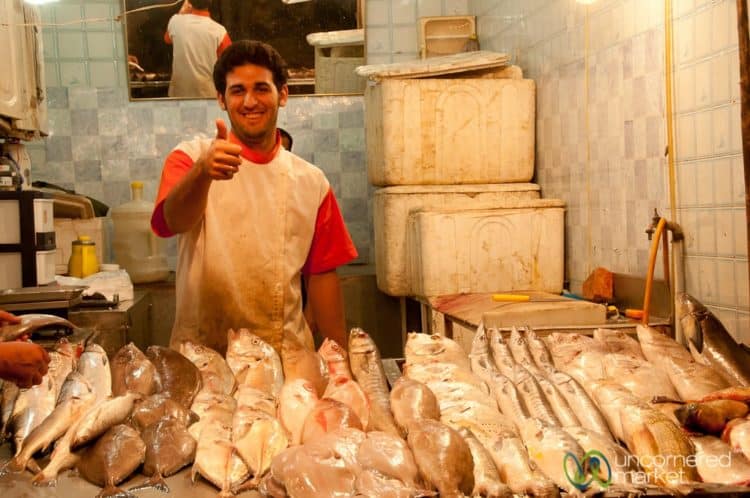
Along the way, we soaked up present culture. We met Iranian people, we poked around markets, we collected more warm greetings and invitations than we knew what to do with. We even dropped in on a roadside kebab stand frequented by packs of jovial Kurdish truckers making their way from Iraqi Kurdistan.

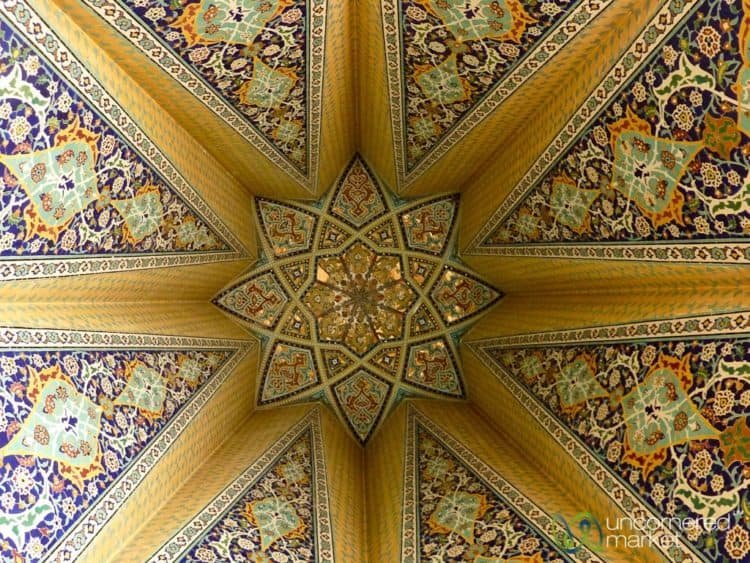
Although this segment of the trip doesn't feature any of the dazzling bits of Persian design and architecture that we'll be serving up in later posts, it provided the historical and cultural base from which to begin to comprehend early Persian history and the surprising ethnic diversity of the Iranian people.
Hamadan
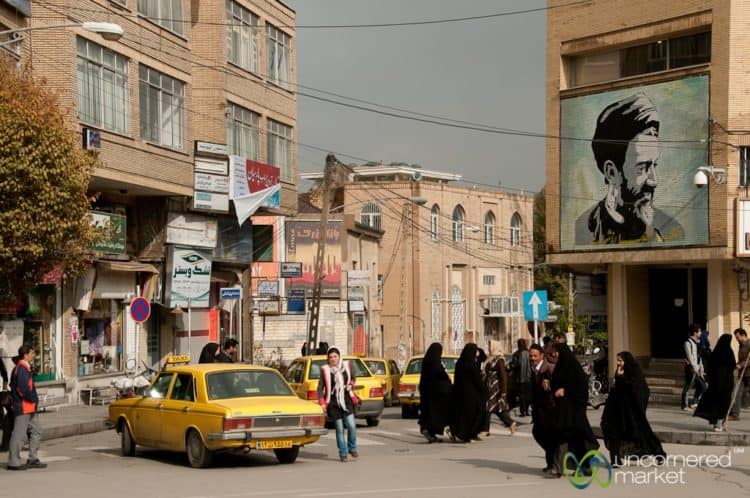
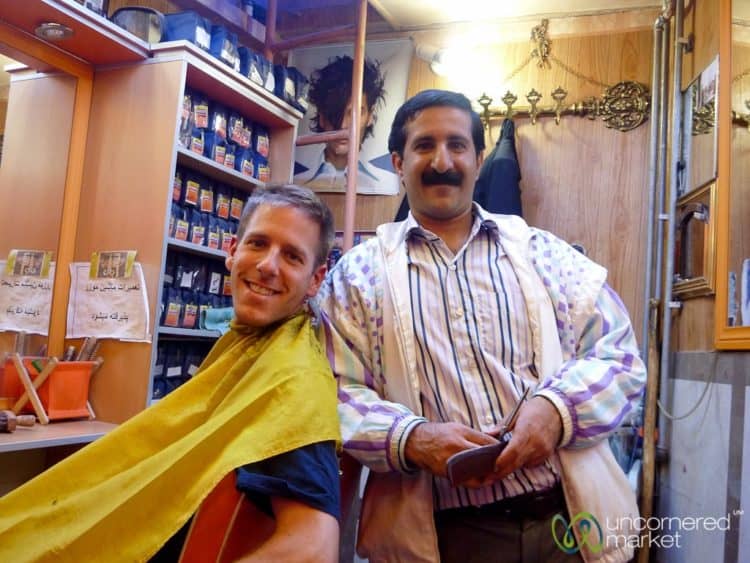
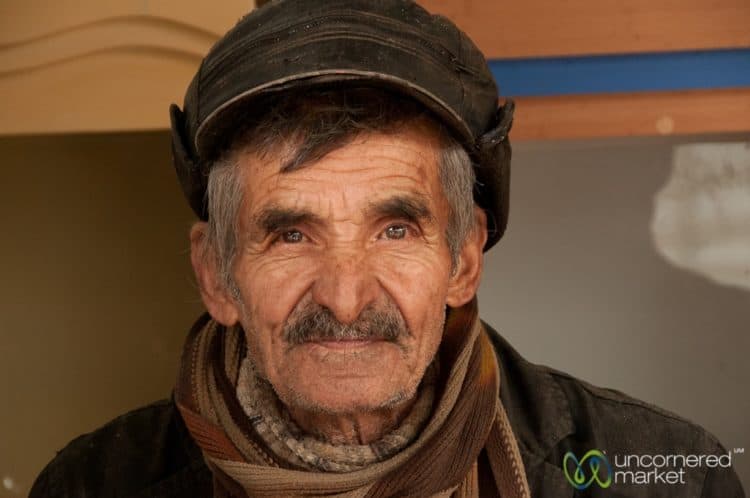
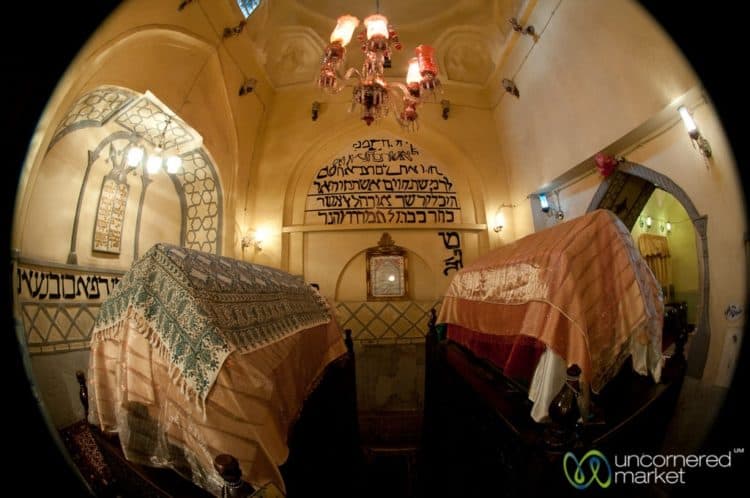
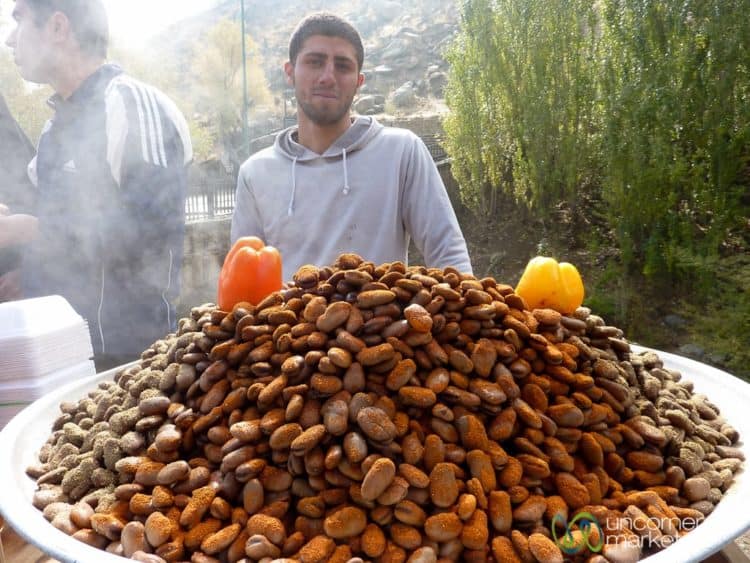
In and Around Kermanshah
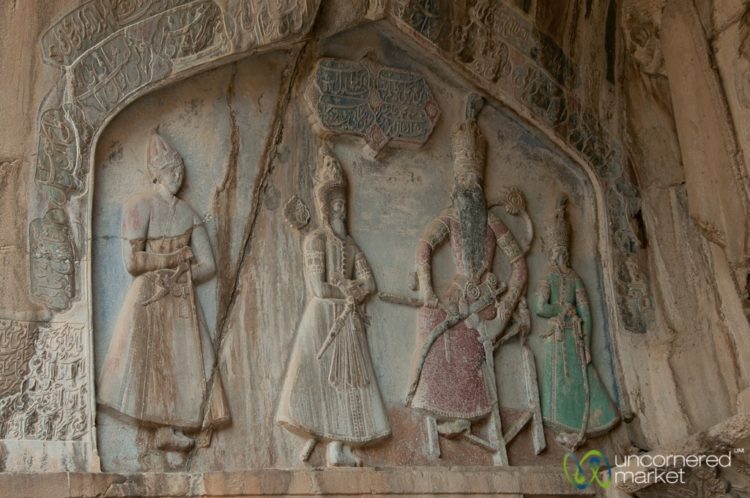
In and Around Ahvaz
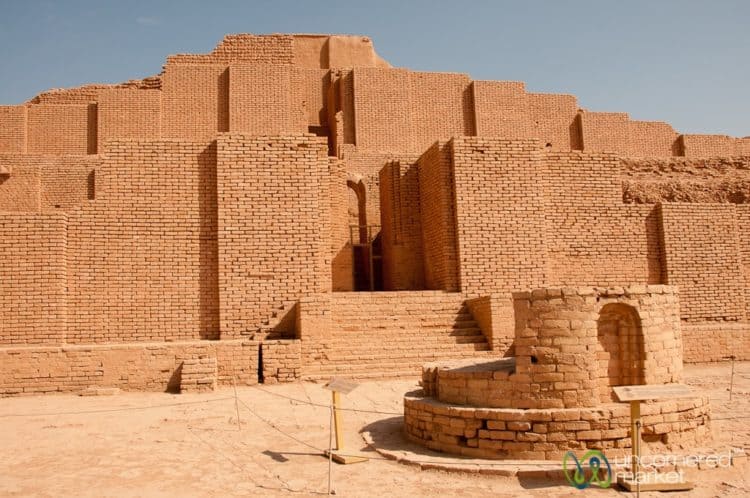
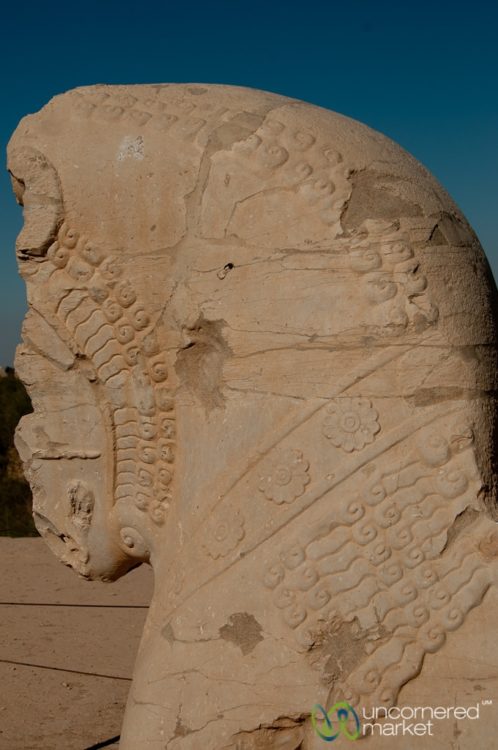
Outside Shiraz
Next up: The crown jewel of the Achaemenid Empire — Persepolis — and the dazzling Persian art and architecture of Shiraz.
Great pictures – I’m really excited to see more!
Really like your photos, I’ll be watching out for your next post on RSS
I love this post! As I said before on another one of these, I really appreciate the glimpse into a country about which we really only negative things.
Wow! These photographs are absolutely incredible! I’d love to go to Iran one day…but surely it’s still a bit dangerous?
why do you think traveling to Iran is a bit dangerous?
Thank you for sharing your photos in Iran! It’s definitely a place we don’t see or hear much about.
Amazing post- can’t wait to read more!
Cool photos, cool post! 😀 This makes me want to go!
Again, lovely photos. I saw some on your facebook page, but these are lovely too. The tomb of Esther is so well maintained! So old, yet so well maintained!
I was reading about Queen Esther. Lots of bloodshed involved as well as the origin of the feast of Purim (deliverance for Jews living in the kingdom of Ahaseurus) comes from Esther. The tomb next to Esther’s is Mordecai’s, right? Impressive in a country where you hear that Israel is a mortal enemy, that they think of preserving history like that, regardless of the fact that it is a Jewish heritage site..why isn’t this publicized more?
Amazing pictures and people there looks so friendly, always smiling and from theyr eyes I could propably tell they are happy! Ciao
Chris
Thank you for the beautiful photos..
Iran is a nice place to visit..
Fantastic photos again! I love the way you guys are covering the Middle East and Central Asia. Those 2 regions are my favourite places to visit. Looking forward for more!
Incredible pictures, I really love them and they tell such a story of your wonderful adventures in Iran! I never realised fava beans were so BIG! And you say you were grateful to eat something other than meat – how would a vegetarian such as myself manage in Iran?
I met you guys briefly in 2008 at a guesthouse in Yuanyang (Xinjie) in Yunnan and have been following your blog since then. You have awesome photos as always, and I’m really looking forward to reading more. I’ve been debating going to Iran for a while and as a solo female traveler, I would be really interested in Audrey’s perspective on the trip as a female traveler. I’ve been to Syria, Jordan and Egypt (and loved all 3, especially Syria)so I have a basic idea of what to expect, but these are much more touristy places than Iran so I’m curious. Happy trails!
Amazing pictures! Ancient Persia was great.
@Amy: There’s a lot more coming — of people and sites across Iran. Stay tuned!
@Sam: More coming. If photos are especially your thing, stay tuned for our website redesign early next year.
@Hopskip: Thank you! Iran wasn’t dangerous in the least — at least not any more noticeably than anywhere else we’ve traveled.
@JoAnna: That was our goal in going to Iran, especially at this time. Not a place where much in the way of reality on-the-street impressions (from ordinary people) are coming out. We are hoping to help change that.
@Claire: I’m glad that we are able to help break through on Iran. Hopefully, one photo and one story at a time, we can help add some other voices to the discourse on Iran.
@Erik: More coming, including Iranian food and a bunch of UNESCO sites.
@Miranda: Glad we could help inspire, plant a seed of a future visit to Iran!
@Sutapa: I’m so glad we had an opportunity to see the Tomb of Esther. It’s not an especially popular or must-see site, but how it’s taken care of (and that it’s Esther) make it fascinating and worth a visit. As for its appearance, the outside of the tomb probably dates from the late 1800s. With any of these tombs, they’ve been built, rebuilt and maintained over the centuries.
Esther’s tomb is right next to Mordecai’s (Esther on the left, Mordecai on the right)
To your question regarding why the tomb’s preservation isn’t’ publicized more, we asked ourselves this question about so many things. It’s just not exciting enough or deemed newsworthy enough. In fairness to the news cycle, however, media does report whenever students threaten to tear the tomb down (as they are apt to do whenever Israel does something to irritate them).
Excellent questions.
@Chris: The Iranian people are certainly happy, or happy enough in face of the sorts of challenges they have to deal with. And yes, the eyes in Iran — as anywhere else — do say so much.
@DJ: Glad you enjoyed them. Iran is an amazing and surprising place to visit.
@Amer: Thank you. I’m glad you enjoy our style of coverage. The Middle East and Central Asia can use all it can get of this type of coverage, the sort that focuses on ordinary life and not on the exceptional and the extreme.
@Andrea: Fava beans are huge! And they are exceptionally tasty, particularly the way they are served in Iran.
Vegetarians in Iran would have a difficult but not impossible time. There’s a heavy leaning toward meat and kebabs throughout the country. However, if you look hard enough, you can find vegetables, vegetarian stews and soups. From our travels, I’d suggest that the northwest probably contains the best culinary options for vegetarians.
Stay tuned for am upcoming complete Iranian food post, including food for vegetarian travelers!
@Catherine: We do remember! (And very coincidentally, we were recently sharing with some other travelers our conversations with you regarding solo female travelers in places like India.)
Regarding solo female travel in Iran, we can recommend it. However, I’ll allow Audrey to respond to that more in depth in a comment of her own. I think she’s also going to write about the subject of women in Iran (travelers and Iranians) in an upcoming post.
@Faruque: Thank you! Great to hear from you. More coming soon.
@Catherine: I agree with Dan regarding solo female travel in Iran – I don’t think you’d have any difficulties nor would it be unsafe (as long as you take regular precautions you’d take anywhere). What I noticed about the two women in our group who were sometimes off on their own exploring was that they were often “adopted” by people who wanted to help them, buy them gifts, take care of them — not in a creepy way, but in a protective and kind way. I found people to be rather respectful towards foreign women. I haven’t been to Syria or Egypt, but I can’t imagine it would be more difficult than those countries.
Let us know if you decide to go and we can help with advice and planning!
As an Iranian, I must be grateful for a non-Iranian showing some beautiful pictures of Iran. Today it’s rare to find anyone who cares anything about Iran or it’s people. Although it’s obvious that many problems that Iran is faced with is political, though we generally believe what our leaders tell us to be true, the truth is that individually Iranian’s are peaceful people who just like to enjoy life!
@Koroush: That’s our intent, in general and with our visit to Iran specifically, is to show the human side of places we visit.
For you, and other readers of this thread about Iran, be sure to check out this brief article about the Iranian people:
https://uncorneredmarket.com/iranian-people-poem/
I was looking for information about Southeast Asia and found your site. As a British woman married to an Iranian for 30 years, I have found your experience of Iran fascinating and heart-warming. I have only visited Iran twice and both times were wonderful. My husband is from Kermanshah so to see that rarely seen side of Iran from your perspective is great. The kindness and hospitality shown to visitors is, in my view, second to none. What a wonderful job you are doing, opening peoples eyes to people and cultures that we may never experience ourselves. Thank you
@Helen: So glad that you stumbled upon our Iran articles after finding us through a SE Asia search. Thanks for your kind words about what we’re doing by sharing stories like this so others may see places and people with new eyes. We were only in Kermanshah for a short time, but we found people incredibly friendly. It would be wonderful to return to Iran and have more time to spend in smaller towns like this. Thanks again for stopping by and commenting.
great
good luck
from iran
Hi Daniel & Audrey
I’m so disappointed that Canadian citizens must be accompanied by a guide at all times, looks like such a lovely country and I’ve only heard great things about the people. Also glad to see one of the paths less traveled displayed with such a beautiful photo essay!
Cheers 🙂
Andrew
Yes, the current visa regulations for US, Canadian and UK citizens makes it a bit more difficult to travel in Iran. However, even though we were on a group tour and then with a private guide we still found time to explore on own and found the trip really worthwhile. In other words, don’t let the restrictions keep you from visiting.
All the American, Canadian&British ! As a matter of fact getting Iran tourist visa is the easiest part of a beautiful and excited trip to incredible Iran ! A land of history with the most hospitable people ! Me as a travel agent will apply and provide visa for above nations during at last 14 working days. You can test yourself!
Just send me your email to send you visa form application !
Best regards,
S.Mehdi Hashemi