Last Updated on December 6, 2019 by Audrey Scott
In pursuit of the iconic, sometimes we lose the people. Then we need to come back. Here are a few thoughts on the often overlooked importance of people to travel and the connection between travelers’ experiences, their spending decisions and the impact on the communities they visit.
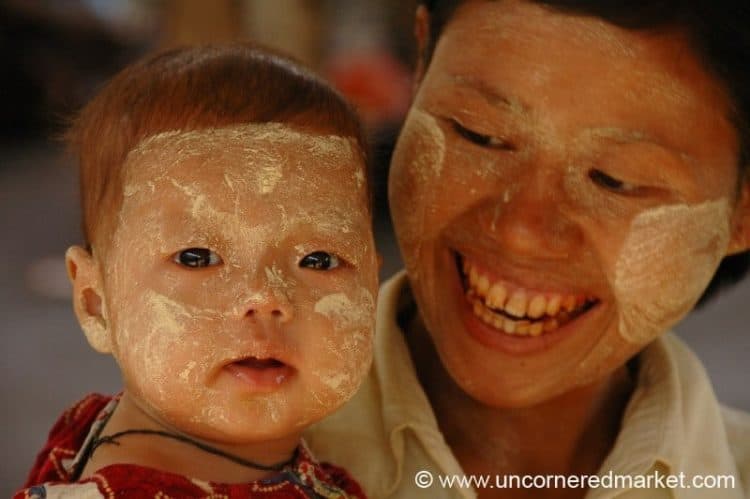
So much ink is spilled, understandably so, on the budget aspect of travel — how much we spend vs. the value we receive – almost to the point of commoditizing every dimension of one’s travel experience.
One bit is often missing in this discussion, however: people. Where do they fit in? How do we value our interactions with them? And ultimately, how can we align our approach and travel spending decisions with a positive impact on the communities we visit?
Before we tackle these questions, a story from Burma.
A few years ago, while visiting Myanmar (a.k.a., Burma) just after the Saffron Uprising, we stopped off at Bagan, a tourist site known for its Buddhist temple-filled plain. We took a nighttime stroll down the town’s main restaurant street in search of dinner. At the time, Bagan was a ghost town — scant traffic, save only for a few waiters milling about, passing time. Lights flickered on and off with rolling blackouts to underscore the moment.
We chose a restaurant, sat down and struck up a conversation with the owner, to whom we remarked of the empty street. He told us that tourist numbers that year had declined nearly 80-90% from the year before due to concerns about recent demonstrations. Then he reflected on his own situation, noting how the economy forced him to close another of his restaurants and let employees go.
In the midst of the silence and strings of holiday lights that hearkened a more festive time, he continued: “From the family running the guesthouse to the man renting bikes down the street, to the restaurant owner to the artist selling sand paintings — you know, tourism is the people’s business.”
Yes, tourism is the people’s business. Think about it.
At the time, we understood the restaurant owner’s point on an economic level. When tourism suffers, so do all the ordinary people – and disproportionately so — who own and staff the businesses that serve tourists.
But there’s something more to the statement. It lies in the answer to this question: Where would tourism and travel be without the people?
They are the ones who get us there. They guide us, feed us, house us, interact with us and teach us something along the way.
In this way, too, tourism is the people’s business.
Note: In September we spoke at two sustainable and ecotourism conferences (ESTC and GSTC). Earlier this year we spoke at G Adventures’ The Future of Tourism on interconnection between travel, technology, humanity and sustainable tourism. Our own words and the reaction of conference-goers underscored the grounding force in our approach to travel and the focus of our work within the tourism industry: people.
This is the first part in a series, The Importance of People in Travel, the second part of which will focus on the connection between how travelers can align their purchasing decisions with their values and have an impact on local communities.
But wait. Isn’t travel about beautiful landscapes?
Often yes, but that’s not the whole story. Most of us can admit to daydreaming about travel in the form of stunning landscapes, temples and churches, all delivered with servings of delicious food and perhaps even a touch of pampering. Picture the perfect vacation photo strip.
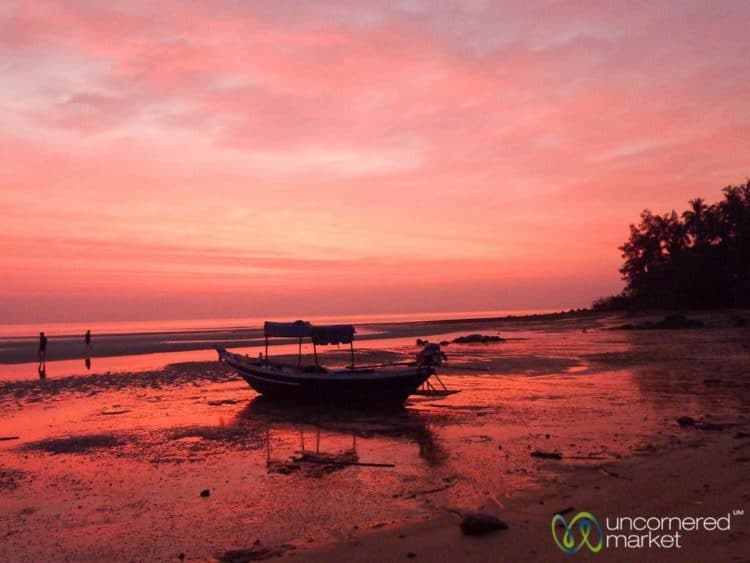
But step back for a moment and think about the experiences that are most precious, the stories we’re likely to recall when the trip is long over. It's those experiences that involve the people we met along the way – perhaps the pregnant Uzbek woman who gave us her lunch, the Czechs who showed us a local pub that the guidebooks never knew about, the Tajik market vendor who gave us a taste of her watermelon, or the Argentine taxi driver who dragged us into a bar to dance all night – that we tell over and over again, that exert an emotional tug on us.
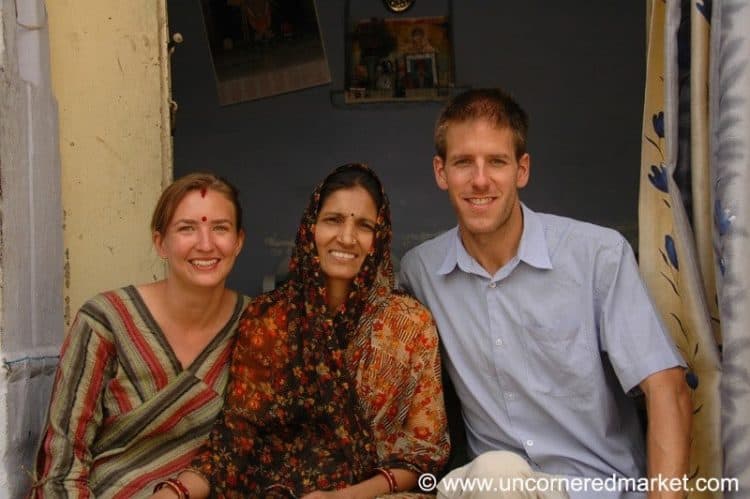
It’s easy, isn’t it, to focus on the destination? But even as we appreciate the journey there, we risk missing the big takeaway – the human takeaway — just as we cross another item off the ‘ol bucket list.
Seeking the Human Dimension of Travel
When we’re asked how we meet and connect with local people everywhere we travel, we admit to having no magic answer. The orientation is pretty simple, though: understand that there are people — engaging people — all around you, many of whom are just as curious about you as you are about them.

One thing will always remain true to every reader of this article: you are human.
“Master of the obvious,” you scoff. Maybe, but this fundamental understanding places you one step closer to recognizing the human characteristics we share with people who may appear very different from us on the surface. Go deeper, even in simple conversation, and you just may find that they have stories, too, and life experiences strikingly similar to yours.
Connecting with people while traveling is not about crossing an item off your list that reads “talk with a local today.” It’s about learning from others and sharing of yourself. This can be uncomfortable at first; going outside your comfort zone and questioning hard-packed assumptions often is. But this is the intersection of travel at the crossroads of personal growth.
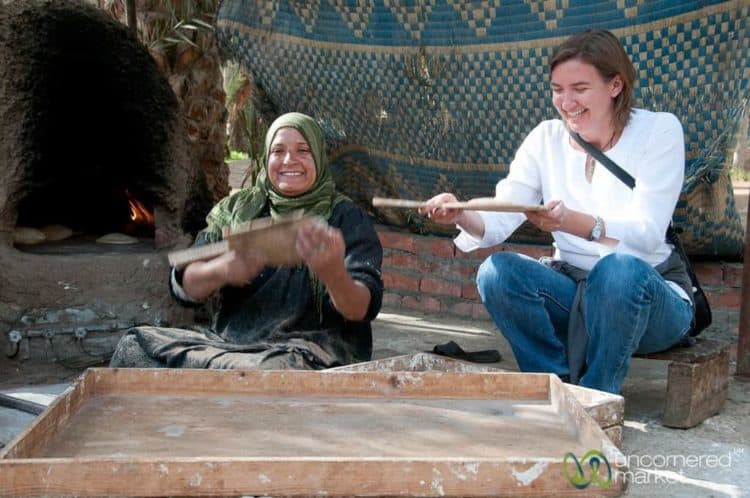
Here's the rub, though. Many of these connections emerge unplanned and unscripted. They happen spontaneously. It’s not about scheduling time into your travel schedule to “meet people”, but about availing yourself of the opportunities only at the hint that they might exist.
Say what? So how to do that?
Sometimes it’s as straightforward as saying “hello” or asking a simple question — “What is this?” “How do you eat this?” “What is the local word for this?” — to break down that initial barrier. Genuine curiosity and respect will likely help take it from there.

Perhaps it may lead to an impromptu feast in a market in Georgia, English language lessons with Japanese school kids in Kyoto, sharing a Hookah pipe with a group of women in Iran, or being invited to a Cambodian Buddhist wedding blessing ceremony.
We open ourselves to people, to our own humanity, and the possibilities are beyond our own imaginations.
Life is a human exercise. So, too, is travel.
What are your thoughts? How do people factor into your travel experiences?
I find a similarity with Dan. Aside from I love photography, I also enjoy playing marbles with kids. I don’t know why. I think it’s because of my childish behavior. LOL
What a wonderful post! When I first started traveling, I was sometimes intimidated about talking to people, particularly when there was a big language barrier involved. But once I started trying, I realized how much communication can happen through gestures, or through just a few words that we both understand. As you say, these moments can’t be planned, but they really are what traveling is all about.
Loved this post! I definitely think meeting people is the best thing about traveling!!
Fabulous post.
Having recently taken a short jaunt to Boston (we’re from Toronto), we soon came to realize that it’s really the people who have such a large impact on the place. One of our favourite memories of travelling to Boston, was eating pizza in Little Italy with a 3rd generation Bostonian and his oldest son.
The interconnectivity of people and place is such that the sum is greater than the parts.
Thanks!
Interaction with people is what I love most about traveling. At the end of the day, a sunset is a sunset, no matter where you experience it. A chat with a person, even if we have to speak with our hands 90% of the time, is unique and rewarding.
Oh it is all about the people. I love the beautiful places I visit and the times I can just absorb it all alone, but my most treasured stories are about the people we’ve met along the way. They are who have helped me become a better person.
We had a beautiful experience in Vanuatu recently with our 1 year old. She encountered a small child in a traditional village we were visiting. The child was dark skinned with a mop of unruly curls and wearing a grass skirt. So unlike my blond haired baby. They became besotted with each other. Touching each other’s face, holding hands and jumping up and down with excitement.
We were at the village to watch the fire walking and I felt so bad because no one was watching it, they were all watching this beautiful exchange. Our babies understand it better than what we do. The differences are there to delight over and the similarities are what connect us.
Yep, yep, and yep. People. I remember the tuk tuk driver in Cambodia that used to be a teacher. I remember he had three children and he made twice as much as a driver than as an educator. I remember his remarks about buying black market gasoline. I don’t remember all the names of the temples we visited at Angkor Wat. Great post!
So true! The people really make all the difference 🙂
I love this piece, and I agree with a lot of what is being said. The more I travel the more I’ve become thoughtful about travel. I often want to see the iconic, but every time I find myself returning to a place, it’s because of the people.
For my husband and me (as you probably know!), travel without people interaction would be the most unsatisfying trip imaginable. The destination doesn’t have to be very ‘foreign’ to seek out interactions. We do this in New York and Washington, DC, our own hometowns. Try it – not everyone will respond positively but we’ve been buoyed by the majority of people who thank us for starting a conversation.
You’ve captured this issue perfectly. But it’s not always an easy thing to do. I think my favourite ‘human’ moments have all been lucky and unplanned. It’s all about being open – to yourself and those around you. If you don’t place yourself in situations where you might local people, it’s never going to happen. You have to trust in the humanity around you that people will always end up connecting.
No matter where I go scuba diving and fall in love the scenery and amazing marine life, it is the people I am sharing it all with that make the difference. And I find (as you guys obviously do) that making real connections with locals is so much easier the smaller the group you are traveling in, one of the main reasons I prefer traveling alone or just with my other half. Thanks for sharing.
I agree completely. I have many wonderful memories while traveling and only a few of those I was alone. That is one of the reason I like traveling solo, I met more people because I had no chocie. Not to say that you don’t meet people when your are traveling with others, I have meet many good friends while traveling with others.
What a wonderful post, I totally agree that being open to meeting people while traveling is essential. Most of my best travel memories revolve around spending time with local people over a great meal.
Wonderfully written and couldn’t agree more. People make the place! I also had the chance to meet Shashi in Udaipur, India. What a wonderful cooking class and incredible person. These are the kind of people that keep us traveling.
Yes, its definitely the people. I went to Seoul, and a kind man helped me find an awesome BBQ restaurant and ordered for me too. And from then on, Seoul has been one of my favorite places to visit.
Great post. I myself am not much a fan of what I call “tick mark tourism” – ticking off all the sights, the “must see” views and monuments. Sure there are some things you don’t want to miss, but I don’t like simply rushing from one view to another. For me views are static. I really like the banal – the everyday life, the streets full of people, taking the public transport.
I remember the tea stall owner in a small town in Kerala (India) inviting us for tea in his little stall. Or the 101-year old lady we met in Sensoji temple in Tokyo – our conversation was really limited to oohs and aahs. But she was really inspiring, still full of life at 101.
This is one of the reasons why we avoid guided tours as much as possible. It’s a sterile way of experiencing a city. We’re much happier taking public transport and experiencing the city rather than viewing it.
Finally, in my experience most people are good and well intentioned. Show some respect and courtesy to the locals and to your fellow travelers and you will see their humanity shine through.
The people absolutely make the destination for me. It’s not just about service or that kind of stuff. I love to see how ‘my equivalents’ are in different countries: there are definitely trends visible everywhere you go and that’s what really makes different destinations stand out for me. Thank you for writing this thought provoking piece
I think that meeting and learning about the people in a foreign place is one of the most important things about travel. Knowing about their culture and how they live, as well as their ways, are one of the most precious things you will take home with you. The sights and the beauty of the place would be just a plus.
As an anthropology student I remember reading how about 95% of all human communication is nonverbal. As a traveller I’ve confirmed how much can be communicated without knowing a word of the native language. Interactions like this are particularily rewarding because they demonstrate true compassion and how much gratitude and joy a traveller showing interest in a stranger’s daily life can bring. I am looking forward to the rest of the series!
@Steve: Playing with marbles, one of those things that makes us more human.
@Jessica: Absolutely. For most of us, interaction can be intimidating for a lot of reasons. But gestures, charades, and facial expressions help come to the rescue. Lots of ways to communicate.
@Violeta: True. People are what differentiate our travel experiences.
@Caz: Beautiful story. Kids get it because they are just like us, but without all the acquired inhibitions.
@Michael: Love it, multiple generations of Italians eating pizza. That connection is playing out in more than Boston. Thanks for sharing.
@Corinne: Well said, great example. We are wired to connect to, and therefore remember, people.
@Jen: We go to see stuff. We return for the people. I think that’s actually a tourism campaign. A valid one, for sure.
@cathy: We’re with you. This reminds me of an article we wrote entitled Curiosity Begins at Home
It’s also the reality, as you point out, that people desire to interact. Asking a question to start a conversation gets it rolling.
@Turtle: Certainly not easy, particularly because there usually are not specific outcomes we can aim for.
@Heather: This is a crucial point — the size of the group you are traveling in definitely affects the sort of interactions you’ll have. Even if we are in a group, we try to peel off and separate ourselves. Many people find groups intimidating and not terribly approachable. Thanks for your comment!
@Stephen: True, traveling solo does force you, if you want interaction, to get out there and do it.
@Ashley: Ours, too.
@Erica: Shashi is a star in Udaipur. Glad to hear that you had a chance to meet and cook with her.
@Jam: Love it. Food, people, connections.
@Srivastha: Tick mark tourism, check box tourism. I’m glad you brought this up. Tick mark tourism definitely doesn’t guarantee interactions.
We are with you regarding everyday life — I like to think of that stuff as living history. 101 years old — now that’s living history, too!
Thank you for such a thoughtful comment and addition to the discussion.
@Zarek: You are welcome. Good service is nice, of course…but it’s even better when served with genuine interest.
@Christian: Absolutely. What you expressed turns around the typical tourist equation.
@Laura: The importance of non-verbal communication cannot be overstated.
True compassion. I’m glad you brought that up. The way we express compassion is what really makes us humans different.
Thank you for such a thoughtful comment and for giving us some more to think about.
Some great perspective here per the usual. I think this is something that’s often overlooked in mainstream travel, and that’s the people we’re living and traveling among. When I think of destinations that really stand out to me, it’s often the people of that destination that make it stand out. Thanks for shedding some light here.
Excellent thought provoking post. I am in complete agreement with you. We often lose site of the impact and importance of the people we meet along the way and as you say most of the stories I like to recall from my travels are about the wonderful, unique and sometimes just crazy people I have met more so than the actual destinations.
Excellent post. For sure travel is about the people. I’d say it’s close to an even mix of cuisine, culture, sites and sentiment. We make an effort to always find our way off the beaten path to indulge in more authentic people experiences, but if you just give everyone a chance while travelling, you’re bound to meet plenty of amazing people.
Really like the idea behind this article.
Cheers.
@Spencer: True. Life shows us that it’s too easy to take people for granted — whether we’re living with, traveling with or visiting among them.
@Nick: Glad you enjoyed the piece. Give them a chance…some apt advice for engaging with people on the road.
@Kerry: Absolutely, not a sideshow, but the main event. I like your expression of the concept of local communities and individuals being “active in their country’s tourism” — makes them sound vested in the outcome. A healthy aim.
Great post and article series! I couldn’t agree more – engaging with local people on your travels is the only way to truly understand the beauty of life in other countries (rather than being ‘bussed in’ and ‘bussed out’ again). Actively spending time and money (and friendship!) with local communities can help them be active in their country’s tourism, rather than just a passive ‘sideshow’.
Having recently come off a world tour, I completely agree that the best travel is meeting new people and learning about new cultures. It’s the main reason my husband and I are CouchSurfers and why we try to be open while moving about. One of our most fun experiences was in a rural town of Cambodia, shown in this video.
While this might be slightly off topic, I did notice something while traveling that gave me great pause. Tourism, especially in the heavily visited places, could really bring out the worst in people. Travelers may be rude, bossy, uncaring about local customs. Locals may prey on tourists, gouging them for more money, telling them lies, playing out scams. And as this pattern continues, no one seems happy anymore. It made me wonder if tourism can cause more harm than good. What are your thoughts?
@Karen: Valid observation. I think all travelers who have been around a bit to both traveled and untraveled places, can attest: when tourism traffic reaches a tipping point, human interactions can turn into transactions and we tourists can often be seen as dollar bills.
However, you can still go to a tourist dump (like the one you described) and aim to travel respectfully and also find pockets of authenticity.
It all depends on how it’s managed by all parties involved.
The point you raise is why we advocate for being a good global traveler and for tourism development to be mindful of communities and their future as they build out. The reality is that some developers and tourism businesspeople care and some don’t. But this is all the more reason why voting with your feet and spending aligned with our values is that much more important. Tourism is going to march forward in its own way, with or without us. Net to net, I think it’s better with us.
Your comment is a really crucial observation to the entire discussion. Thank you for taking the time to share it with us.
I liked the article and how the focus should be more on the human interactions, not only on the commercial transations. I think this TEDx video explains things also well http://youtu.be/_CNulcWfi-0 Here in Iceland we have been focusing on what is unique and can only been seen in Iceland, along with just couple other countries e.g. the northern lights and then of course the unique landscape, but I think we should actually focus more on the human interaction. I think that is the next step in the development of the tourism over here in Iceland:)
@Jackson: Focus on the people in tourism — that’s your next step. For us all, maybe it can be a continual consideration.
Excellent post. Again, straight to the point. “It’s about learning from others and sharing of yourself.” Tourism is really about the people, small things can make so big difference and wonderful memories.
Great writeup & cannot agree more that yes Tourism is a peoples business – its what makes us experience various cultures around the world & we take back memories of those people that left a significant positive impact – thank you for sharing this post guys 🙂
Thanks, Abhishek, for your kind comment. Although many travel pieces and photography focus on the “top sites” it’s the people that are at the core of a what make our travel experiences enriching and full of memories.
Dan you are so right, I cannot think travelling without the interaction with the people. In fact we often try to connect with locals by using couchsurfing for instance, it’s a great way for us to get to know people that live in the areas we visit, to learn what they do, how they spend their day to day life, they show us aspects of the local culture that otherwise we might miss. The travel experiences that we remember the most so far are the ones where people played an important part to it, places and views are nice is true, but people really make travelling something very special.
Thanks, Franca. We’ve had great experiences with CouchSurfing as well. In any event, whether or not we are staying with them in their homes, people are critical to the travel (and life) experience.
What a wonderful post! This is why I started my own blog years ago and what keeps me going. I always try to look behind the scenes and find out more about the people we meet along the road. The insights you get by doing this are priceless and we ourselves grow by getting a better understanding for the cultures and people we meet on our travels.
Sometimes you have to be open to views that you are trained not to accept. But if you look deeper you may be surprised about the answers you get. Having traveled so far and to so many different countries and cultures in my life I realize that the world in which you have been raised is not the only one. There are so many others out there, waiting to be discovered. And waiting to be disclosed to our readers.
This is, what travel blogging should be about, isn’t it?
Thanks, Monika. Absolutely agreed: sometimes — often times — we are faced with views of the world that we are not trained to accept and that are orthogonal to all of our experience to that point.
To my mind, this is not only what travel blogging is about, this is what travel is about. And in my experience, it’s what life is about. Which reminds me of a recent article I wrote in attempt to unpack the connection between travel, life and lifelong learning called Travel Is the Classroom.
Love the Burmese child picture at the top. Reminds me of my time in Myanmar.
I’ve always mimicked your opinion/perception on travel. I always tell people that don’t travel much to take pictures of not only the landscapes but also the people they meet while on the road. Those pictures (of those people you met) will bring back so many more memories then any landscape will…for sure! .
Thanks, Mike. Indeed, it’s all about the people.